STUCKFIX
handymanDIY Friendly
airware

Bathroom Exhaust Fan Loud and Not Pulling Moisture

A bathroom fan that roars but barely moves air is wasting electricity and leaving moisture to rot your ceiling. Fix the noise and restore airflow without replacing the whole unit.

Category:Bathroom
Difficulty:Easy
Time:20-30 min
Success:50%
Updated:May 23, 2026

quick_referenceQuick Answer

For Bathroom Exhaust Fan Loud and Not Pulling Moisture, start with "Kill the power at the breaker, not just the wall switch": Bathroom fans are often on shared circuits. The wall switch may only cut one leg — you can still get hit inside the housing. Go to your breaker panel, find the bathroom circuit, and flip it off. Use a non-contact voltage tester inside the fan housing before you touch anything. Once it's dead, pull the cover down by squeezing the spring clips on each side. Stop DIY if you see exposed or frayed wiring inside the fan housing. This is listed as a easy recovery and usually takes about 20-30 min.

verifiedGuide Snapshot

Repair areaBathroom
Estimated time20-30 min
DifficultyEasy
Stop conditions4

Last updated May 23, 2026. Review the stop conditions before continuing.

account_treeRecovery State

Current stateNoisy
Specific stateNot Venting
Failed stepNormal Operation
Likely failure typeWorn Part
DIY boundaryDIY recovery first
paymentsCost decision

help1. Understand the Problem

Exhaust fans get loud for two reasons: the motor bearings are worn out from years of humidity, or the fan blade and housing are caked with dust that throws the blade off balance. When airflow drops at the same time, the duct damper is often stuck shut or the vent cover outside is blocked. These fans run in the worst environment in your house — hot, wet air pulling through them every day.

build_circle2. Try This First
Best First Step
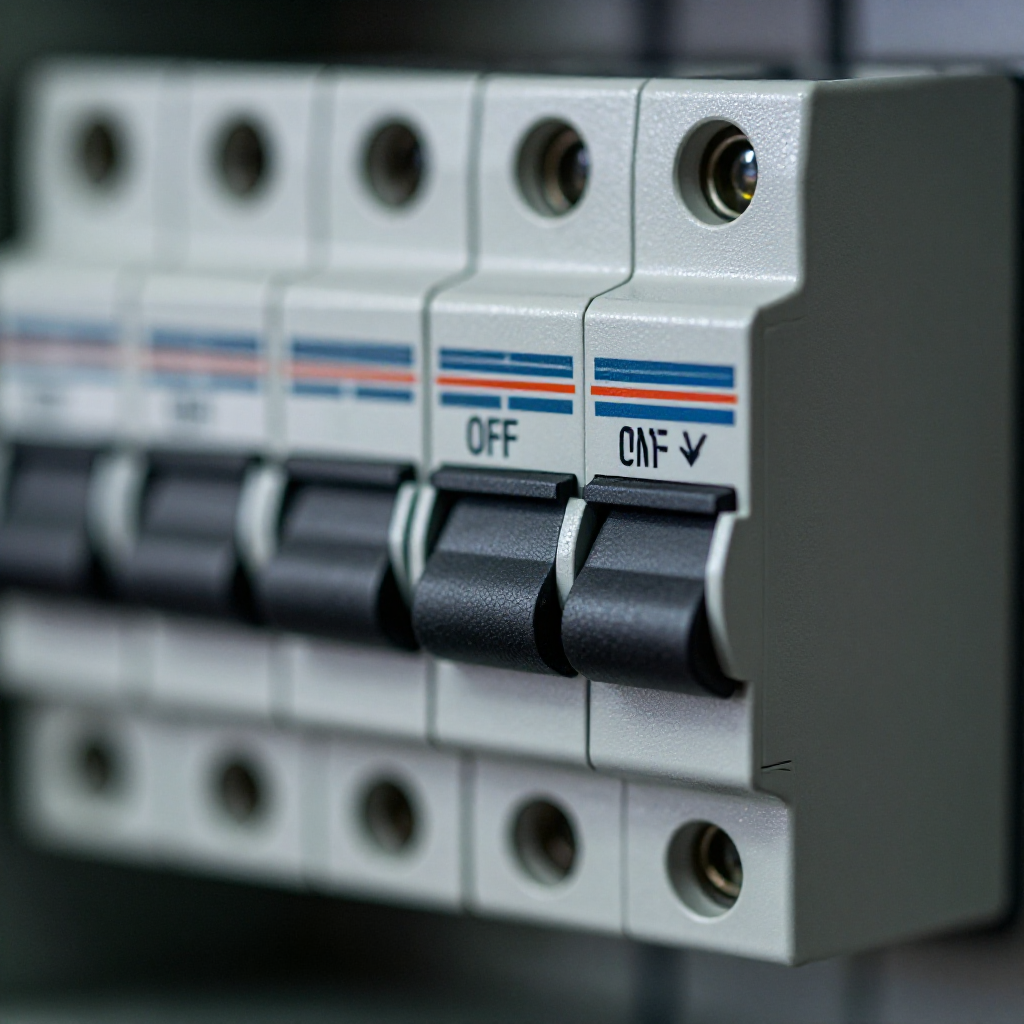
Kill the power at the breaker, not just the wall switch

Kill the power at the breaker, not just the wall switch

Bathroom fans are often on shared circuits. The wall switch may only cut one leg — you can still get hit inside the housing. Go to your breaker panel, find the bathroom circuit, and flip it off. Use a non-contact voltage tester inside the fan housing before you touch anything. Once it's dead, pull the cover down by squeezing the spring clips on each side.

visibility3. Visual Guidance

See what's happening and how to try the first recovery step.
1
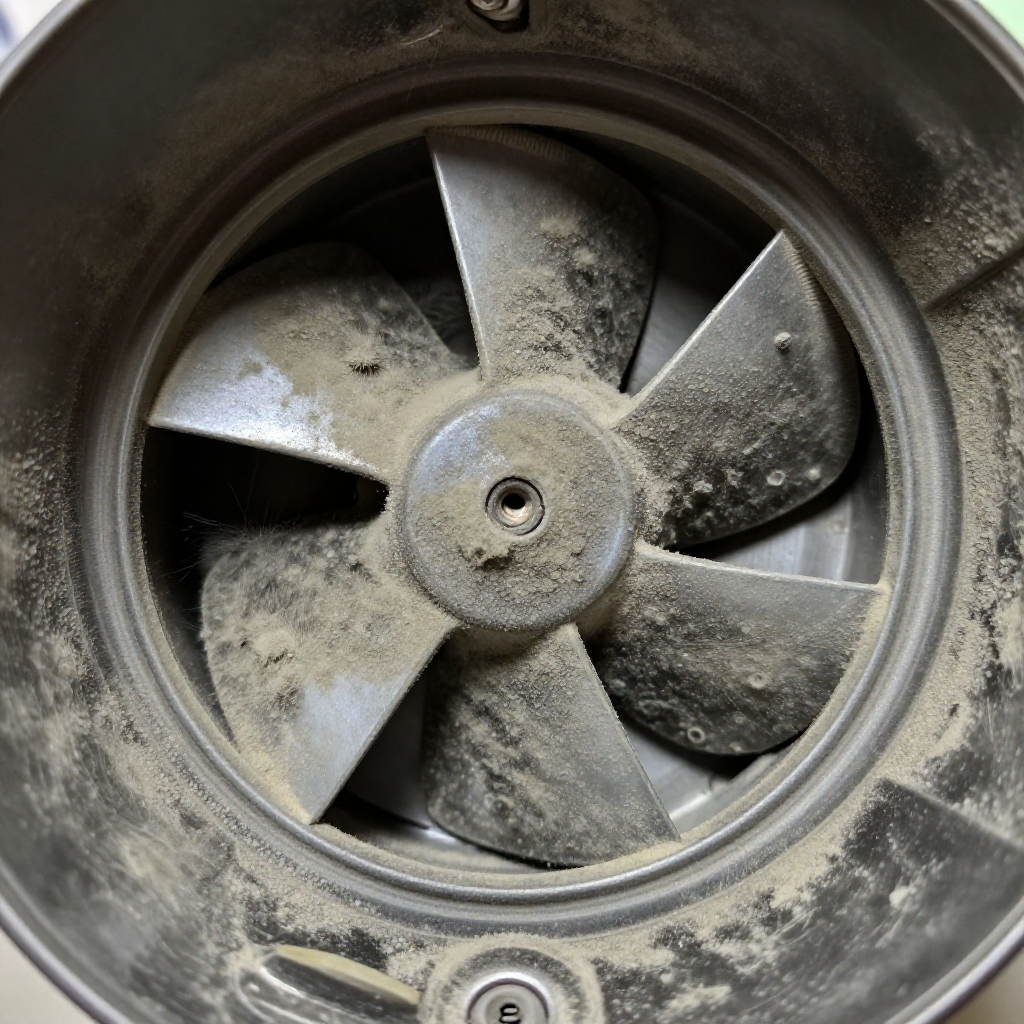
Clean the fan housing and blade assembly
Clean the fan housing and blade assemblyOnce the cover is off, you'll probably see a thick layer of gray dust matted to everything. Vacuum out the housing with a brush attachment. If the fan blade is removable, take it off and wash it with warm soapy water, dry it completely, then reinstall. A dirty blade throws off balance and makes the motor work harder — that's where most of the noise comes from.
2
Check the damper flap and duct connection
Check the damper flap and duct connectionBehind the fan housing, there's a small metal or plastic flap that opens when the fan runs and closes to keep cold air out. If it's stuck from paint, dust, or a bent hinge, the fan can't exhaust. Reach in and make sure the flap moves freely. Also check that the duct hose is still connected — it can come loose from vibration.
3
Check the exterior vent cap outside
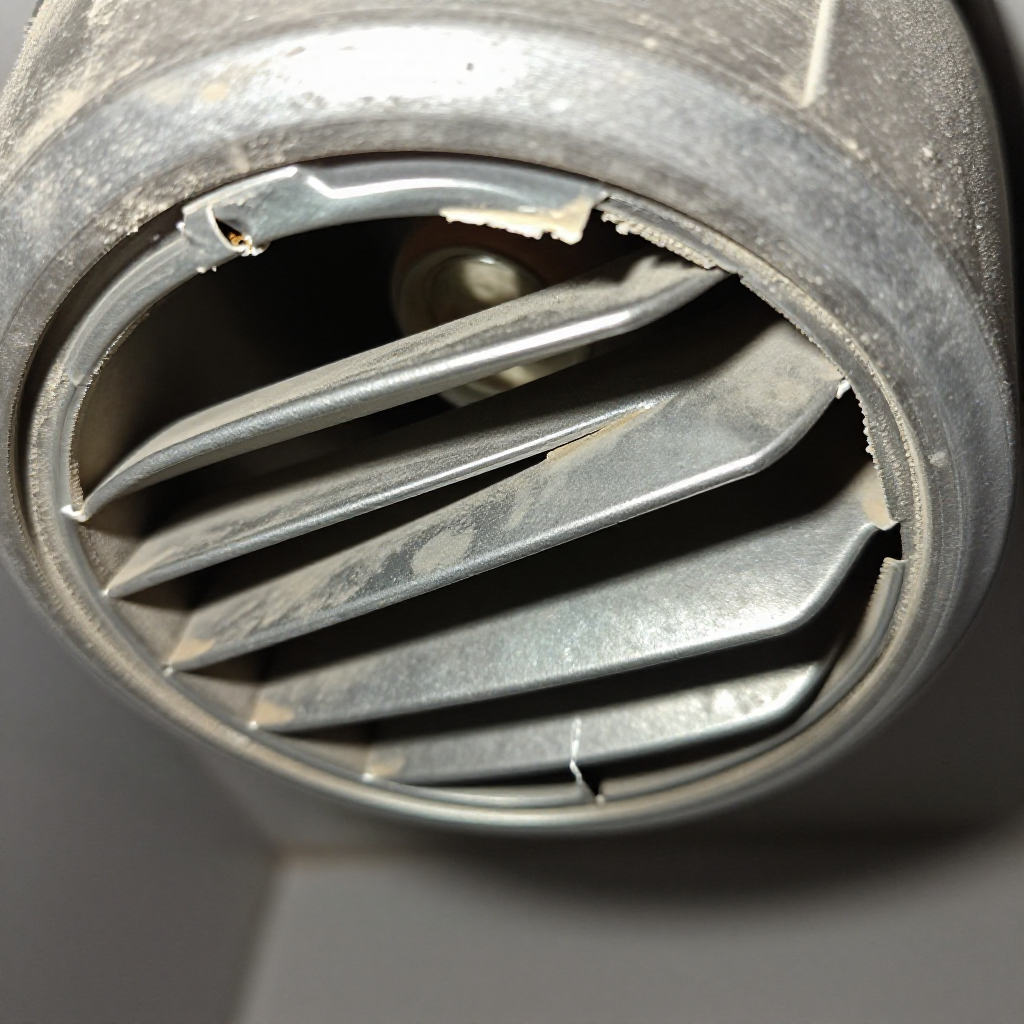
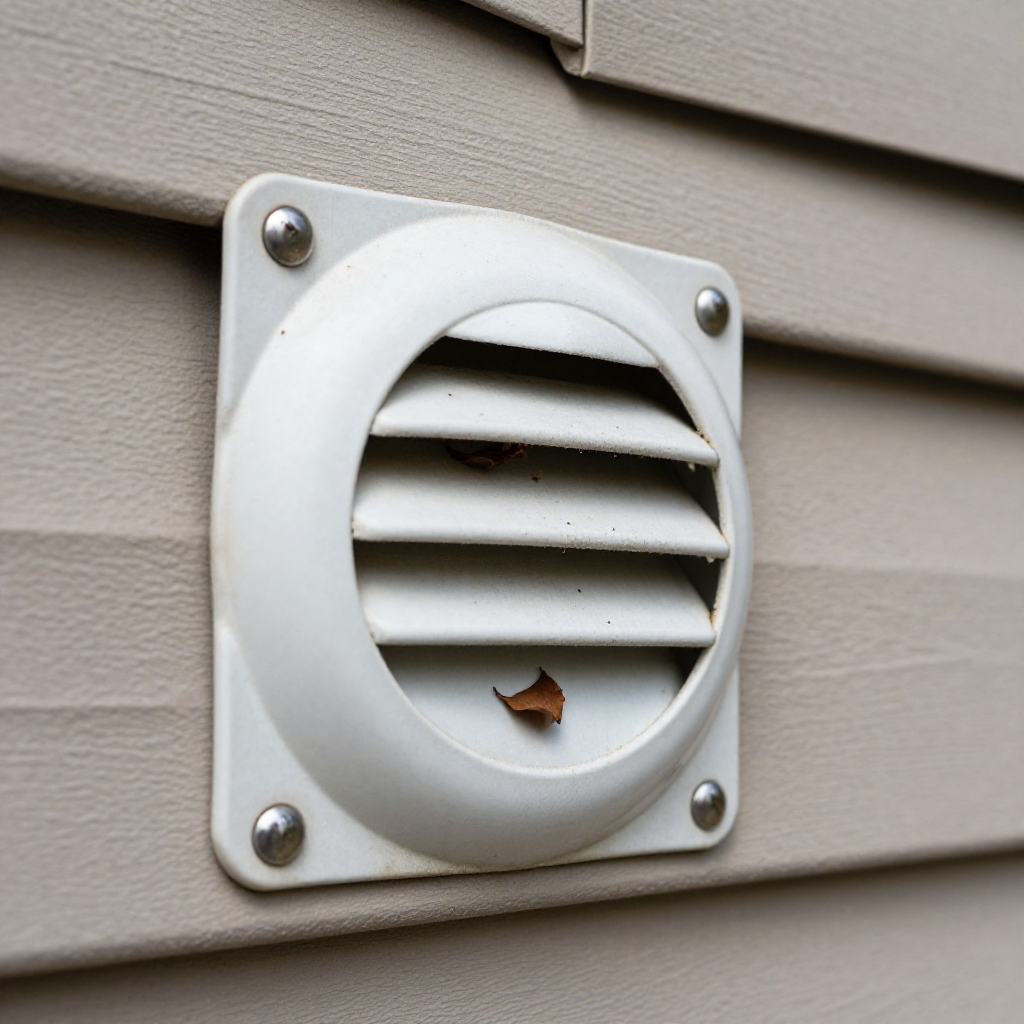
Check the exterior vent cap outsideGo outside and find where the fan exhausts — usually a small louvered cap on the side of the house or in the soffit. Birds, wasps, and debris love nesting in these. Clear out anything blocking the opening and make sure the louvers open freely when the fan runs.

autorenew4. If That Doesn't Work

Try the next recovery options.

build
Replace the motor assembly instead of the whole fanIf cleaning didn't fix the noise, buy a replacement motor kit for your fan model. Most major brands (Broan, NuTone, Panasonic) sell motor assemblies that plug right in without replacing the housing — saves you a drywall repair.
chevron_right
upgrade
Upgrade to a quieter, higher-CFM fanIf the fan was undersized to begin with (common in older homes), replace it with a unit rated at least 1 CFM per square foot of bathroom. Modern fans under 0.3 sones are barely audible and move twice the air.
chevron_right

Frequently Asked Questions

How often should I clean my bathroom exhaust fan?expand_more
At least once a year. If you have long-haired people in the house or the bathroom gets heavy use, every 6 months. A dirty fan runs louder, moves less air, and burns out faster.
Can I use WD-40 to quiet a noisy bathroom fan motor?expand_more
No. WD-40 attracts dust and turns into a sticky mess inside a fan housing. If the bearings are shot, the motor needs replacement — oil won't save it. Use a few drops of electric motor oil if the motor has oil ports, which most newer ones don't.
My bathroom fan is quiet but the mirror still fogs up. What's wrong?expand_more
Your fan is either undersized for the bathroom or the duct run is too long or kinked. You need about 1 CFM per square foot. A 50-square-foot bathroom needs at least a 50 CFM fan. Also check that the door has a gap at the bottom for makeup air.
The fan is quiet now but I still hear rattling. What else could it be?expand_more
Check the metal cover grille — the spring clips get loose over time and the grille vibrates against the housing. Bend the clips slightly or add small felt pads where the grille touches the ceiling.

warning5. Stop DIY If

Don't continue if any of these apply.

reportYou see exposed or frayed wiring inside the fan housing.
reportThe duct vents into the attic instead of outdoors — this causes mold and rot.
reportThere's visible mold growth on the ceiling around the fan or in the attic above it.
reportThe fan housing is rusted through or the mounting brackets are failing.
Still stuck?Get personalized help with AI Recovery.

Related Recovery Problems

View all arrow_forward

Same Device Recovery States

Device index arrow_forward

Similar Failure Pattern

This page provides general DIY guidance.
If you're unsure, it's always best to consult a professional.