STUCKFIX
handymanDIY Friendly
vibration

Washing Machine Walks Across the Floor During Spin

A washing machine that walks or shakes violently during the spin cycle usually has failed shock absorbers or unbalanced loads. Here's how to fix it.

Category:Appliances
Difficulty:Moderate
Time:1-2 hours
Success:50%
Updated:May 26, 2026

quick_referenceQuick Answer

For Washing Machine Walks Across the Floor During Spin, start with "Stop the cycle and redistribute the load before doing anything else": If the machine is walking violently, hit pause or cancel immediately. An unbalanced load is the first thing to rule out. Open the door, spread the laundry evenly around the drum — no bunching on one side. Add a few smaller items if one heavy item is creating imbalance. Restart on a gentle or slow spin cycle. If it runs smoothly after redistribution, your shocks are probably fine and it was just a load issue. If it starts walking again on a normal mixed load, the shock absorbers are worn and need replacing. Stop DIY if if the machine is making a grinding or growling noise during spin, the drum bearing may be failing — this requires professional repair and the inner drum may need replacement. This is listed as a moderate recovery and usually takes about 1-2 hours.

verifiedGuide Snapshot

Repair areaAppliances
Estimated time1-2 hours
DifficultyModerate
Stop conditions3

Last updated May 26, 2026. Review the stop conditions before continuing.

account_treeRecovery State

Current stateWalking Vibrating Spin
Specific stateShock Absorbers Failed
Failed stepSpin Cycle
Likely failure typeWorn Part
DIY boundaryDIY recovery first
paymentsCost decision

help1. Understand the Problem

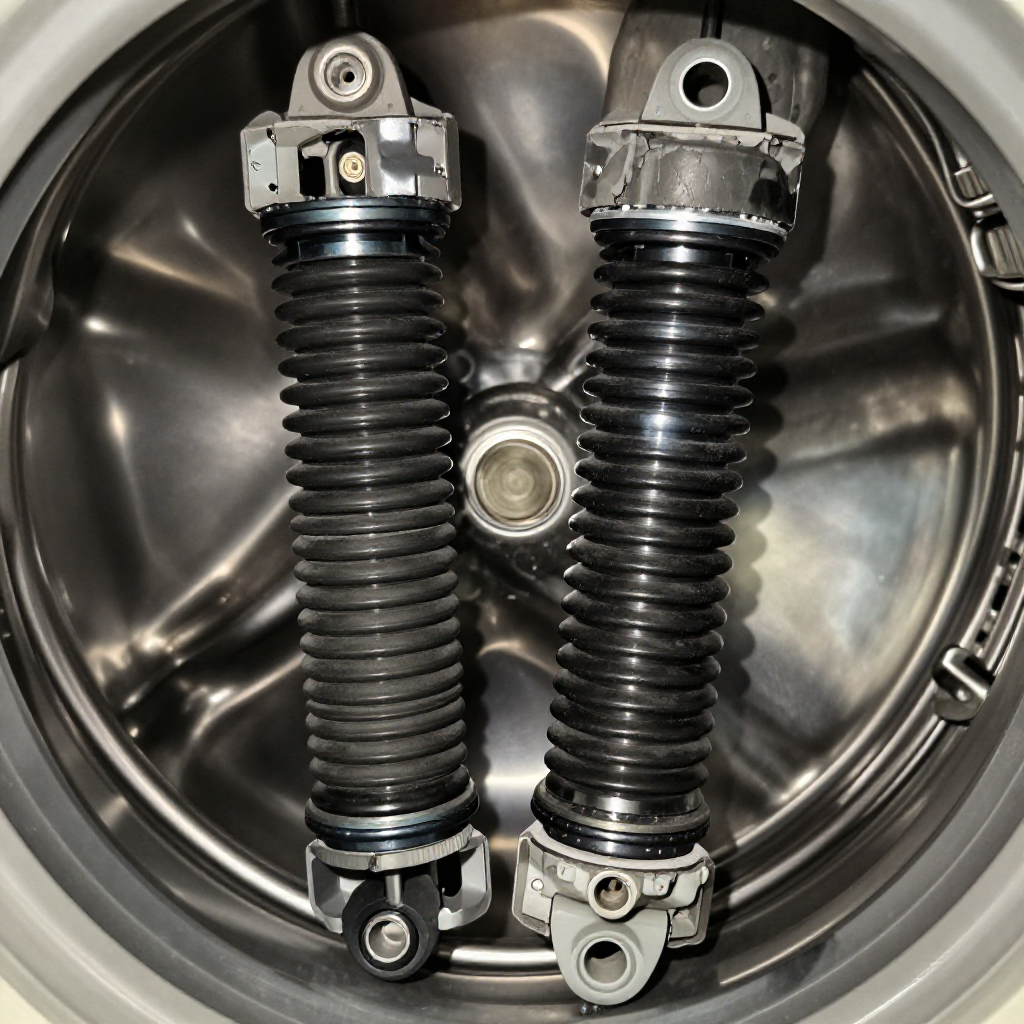
When a washing machine walks across the floor during spin, it's almost always the shock absorbers. Front-loaders have two to four shock absorbers (dampers) that bolt to the outer drum and the chassis — they keep the tub stable. Over time the hydraulic fluid inside ages and the dampers weaken. Once they fail enough, the tub's imbalance during high-speed spin transmits directly to the cabinet, and the whole machine vibrates and walks. Unbalanced loads (one heavy item, shoes, a blanket bunched to one side) can trigger it even with good shocks — but if it happens on normal loads, the shocks are worn.

build_circle2. Try This First
Best First Step
Stop the cycle and redistribute the load before doing anything else

Stop the cycle and redistribute the load before doing anything else

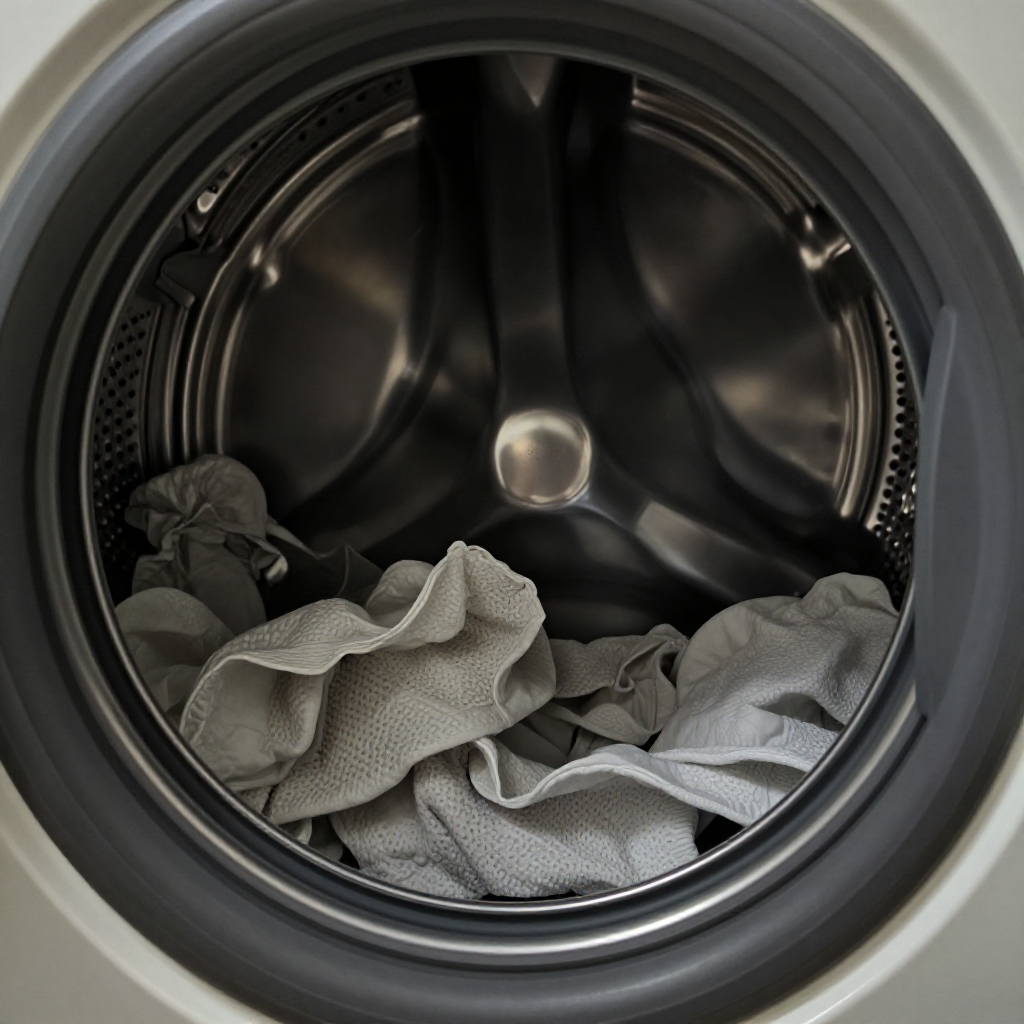
If the machine is walking violently, hit pause or cancel immediately. An unbalanced load is the first thing to rule out. Open the door, spread the laundry evenly around the drum — no bunching on one side. Add a few smaller items if one heavy item is creating imbalance. Restart on a gentle or slow spin cycle. If it runs smoothly after redistribution, your shocks are probably fine and it was just a load issue. If it starts walking again on a normal mixed load, the shock absorbers are worn and need replacing.

visibility3. Visual Guidance

See what's happening and how to try the first recovery step.
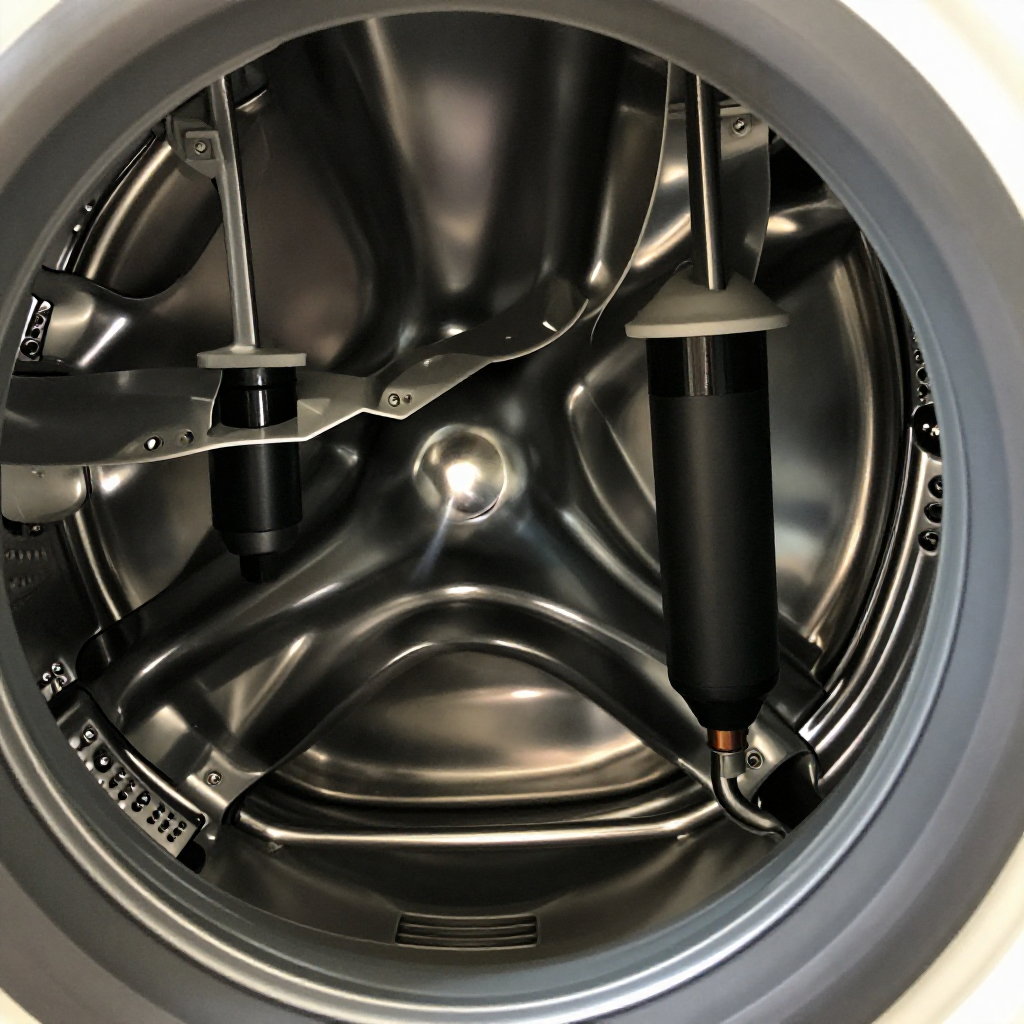
1
Unplug the machine and pull it out from the wall
Unplug the machine and pull it out from the wallDisconnect power — unplug it or switch off the circuit breaker. Pull the washing machine forward so you can access the back panel. Have a friend help because front-loaders are heavy and you need to lean it back to get under it. This is a two-person job — don't try it alone. Also turn off the water supply valves behind the machine.
2
Lay the machine on its back to access the shock absorbers
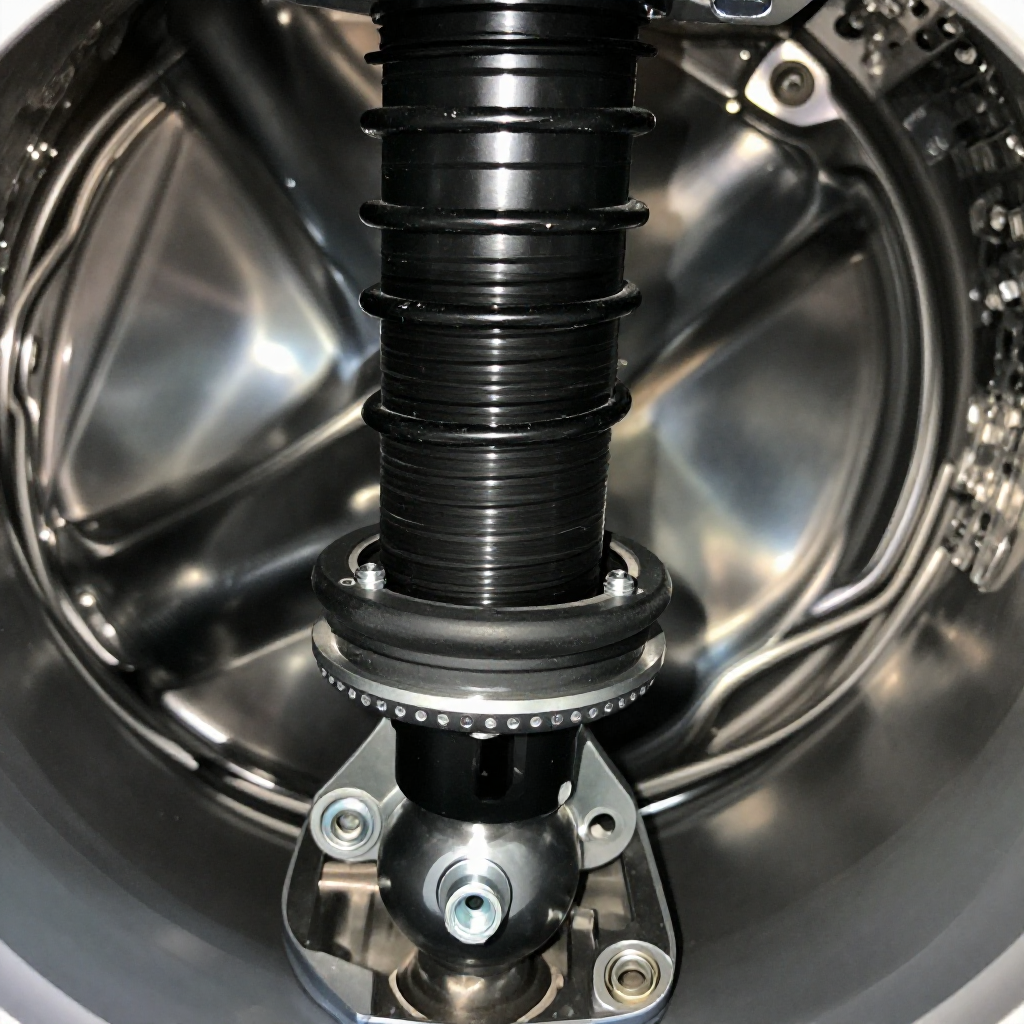
Lay the machine on its back to access the shock absorbersWith a friend, carefully lay the washing machine on its back so you can see the bottom. The shock absorbers look like small cylindrical pistons — one end bolts to the outer drum and the other to the chassis. You'll typically find two in front-loading washers (some models have four). The top mount of each damper goes to the outer drum bracket; the bottom mount pins into a chassis slot. Check if the rubber grommets at each end are cracked, dried out, or missing — that's a sign of age and failure.
3
Remove the old shock absorbers and note the part number
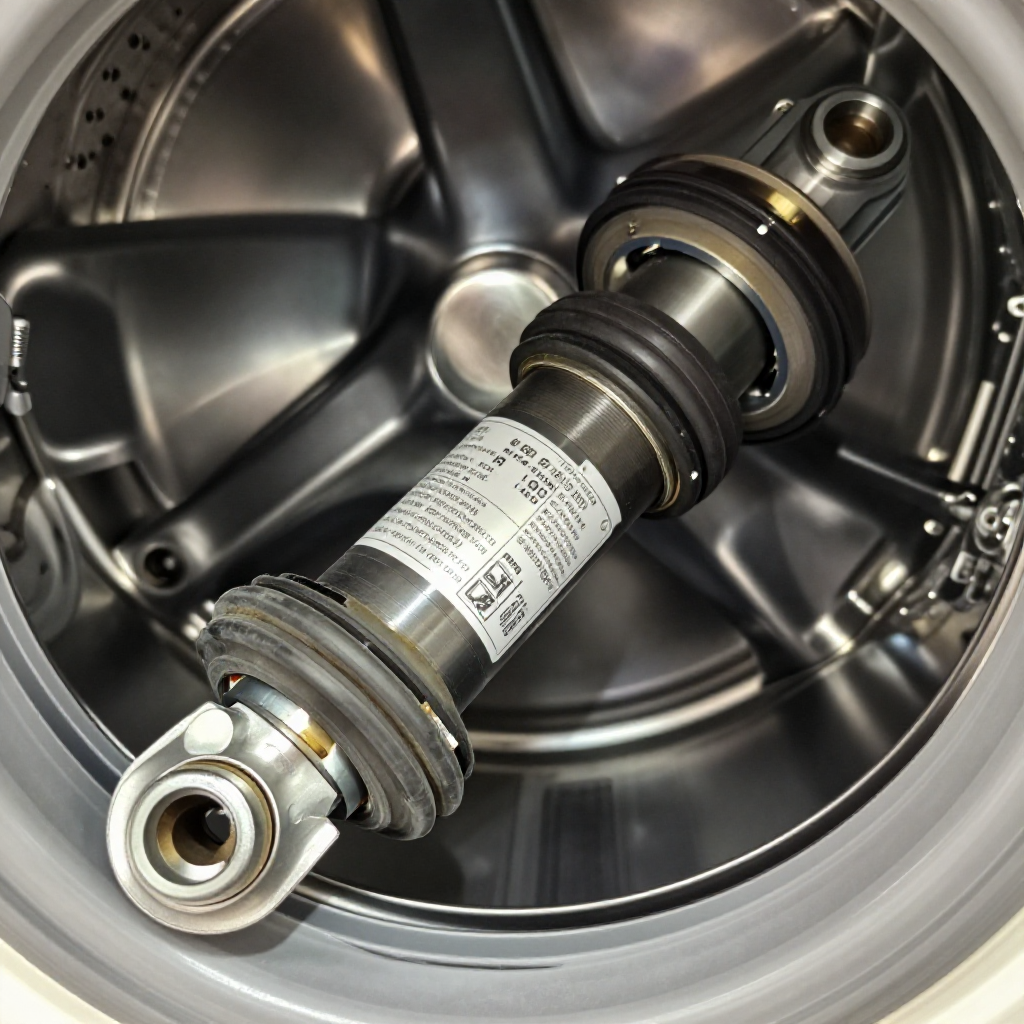
Remove the old shock absorbers and note the part numberCompress the top clip with pliers and lift it off the ball head. Do the same for the bottom mount. Some use a bayonet slot — twist and pull. Once free, pull the damper straight down. Look at the part label on the side of the damper body for the part number. Take a photo before you remove anything. Most washers use 2-4 identical dampers (common brands: Samsung, Whirlpool, LG use different numbers). Buy OEM replacements online or from an appliance parts store — expect to pay $15–$35 each.
4
Install the new shock absorbers and test run
Install the new shock absorbers and test runPush the new damper's top pin into the outer drum bracket until the clip clicks. Then push the bottom pin into the chassis slot. Repeat for all dampers. Make sure the rubber grommets are seated correctly — they absorb vibration and keep the mounts quiet. Once both are installed, carefully stand the machine back up. Plug it in, reconnect water, run a small load on a fast spin cycle. A well-balanced load should barely move the machine — not walk or shake.

autorenew4. If That Doesn't Work

Try the next recovery options.

checklist
Level the machine with wooden shims under the feetBefore replacing shocks, check if the machine's feet are level. Use a bubble level on top of the machine. Adjust the leveling feet (they screw in and out) until it's perfectly level side to side and front to back. Then test again. Sometimes walking is partly a leveling problem — even good shocks can't compensate for a machine on an uneven floor.
chevron_right
warning
Check the drum bearing if the noise is grindingIf the machine makes a grinding noise during spin (not just vibration), the drum bearing may be failing. That's a different repair — involves replacing the outer drum and bearing assembly, which is expensive (parts + labor often $300–500). If the tub also has play (grab the drum and try to rock it — you should feel no movement), the bearing is gone.
chevron_right
engineering
Call a repair technician if you're not comfortable laying the machineShock absorber replacement is a standard repair and most appliance techs can do it in under an hour. Parts for front-loaders are usually $30–80 for the set. Labour typically runs $100–$180. Get a few quotes — it's often worth letting a pro handle it if you're not comfortable working underneath a heavy appliance.
chevron_right

Frequently Asked Questions

Why does my washing machine walk across the floor during spin?expand_more
Failed shock absorbers (dampers) are the most common cause. The hydraulic dampers that hold the drum stable weaken over time. Once they're worn enough, the imbalance in the drum during high-speed spin makes the whole machine vibrate and walk. Unbalanced loads can also cause it, but if it happens on normal loads, the shocks are worn.
Can I replace washing machine shock absorbers myself?expand_more
Yes — it's a moderately advanced DIY repair. The job involves laying the machine on its back, disconnecting the dampers, and bolting new ones in. You need a friend to help because the machine is heavy. Parts cost $15–$35 each, and most washers need 2-4 of them. Budget 1–2 hours. If you're not comfortable working under a heavy appliance, call an appliance tech.
What causes an unbalanced load in a washing machine?expand_more
One heavy item (a towel, jeans, bathmat) bunching to one side is the most common cause. Running a single shoe, a large blanket that can't spread evenly, or a load with very different fabric weights (heavy denim + light T-shirts) will cause imbalance. Always balance the load by hand before starting — spread items evenly around the drum.
How long do washing machine shock absorbers last?expand_more
Typically 8–12 years depending on usage and how often you overload the machine. Overloading accelerates wear because it stresses the drum and shocks more than designed. Heavy-use families may see them wear out sooner.
Is it dangerous to use a washing machine that walks during spin?expand_more
It's not immediately dangerous but it's not good — it can damage your floor (hardwood denting, tile cracking), can loosen the water inlet connections, and will eventually damage other components like the drum bearings. Fix it before it causes more damage.

warning5. Stop DIY If

Don't continue if any of these apply.

reportIf the machine is making a grinding or growling noise during spin, the drum bearing may be failing — this requires professional repair and the inner drum may need replacement.
reportIf water is leaking from the bottom of the machine during fill or drain cycles, the tub seal may be compromised — do not run the machine until you've diagnosed the leak to avoid electrical damage.
reportIf the machine is more than 12 years old and has multiple failing components (shocks, bearings, pump), consider replacement rather than repair — the cost of multiple parts and labor often approaches the cost of a new machine.
Still stuck?Get personalized help with AI Recovery.

Related Recovery Problems

View all arrow_forward

Same Device Recovery States

Device index arrow_forward

Similar Failure Pattern

This page provides general DIY guidance.
If you're unsure, it's always best to consult a professional.