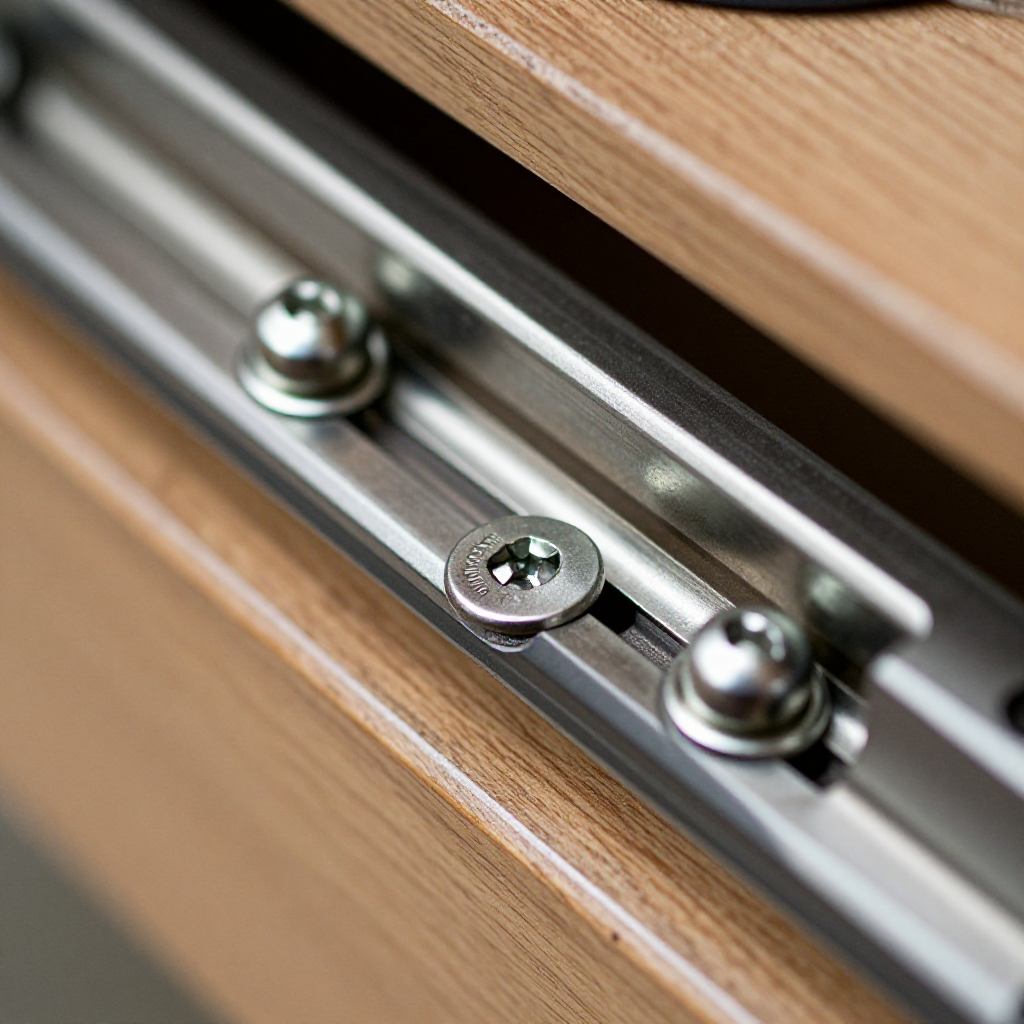
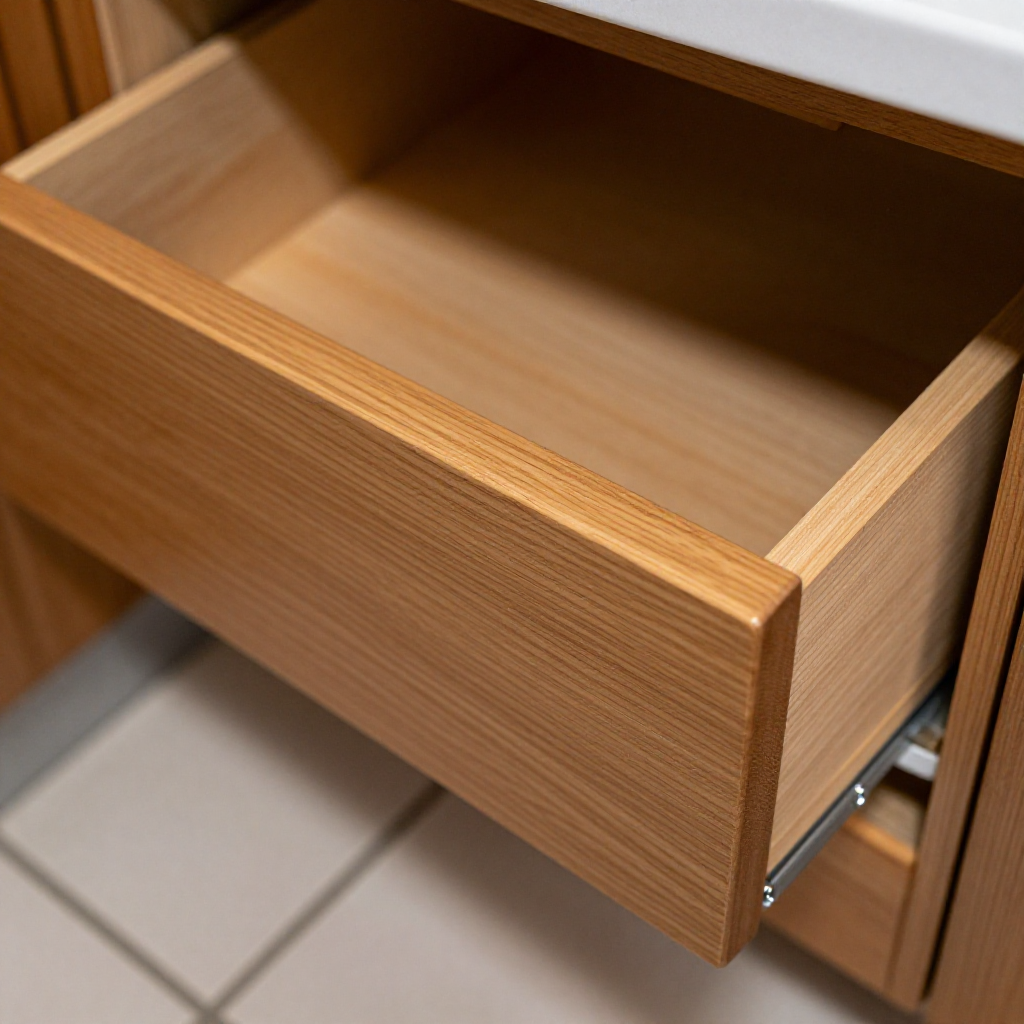
STUCKFIX
handymanDIY Friendly
draw

Cabinet Drawer Slide Broken — Sagging, Sticking, or Off the Track

A drawer that sags, scrapes, or falls out when opened has a broken slide or separated ball bearing cage. Fix it with a $10 replacement set — no cabinet disassembly needed.

Category:Furniture
Difficulty:Easy
Time:20 min
Success:50%
Updated:May 22, 2026

quick_referenceQuick Answer

For Cabinet Drawer Slide Broken — Sagging, Sticking, or Off the Track, start with "Remove the drawer and diagnose exactly which slide failed": Pull the drawer all the way out — most slides have a plastic release lever on each side. Push one lever up and the other down (or both inward), then lift the drawer out. Now slide each rail in and out by hand. The bad one will feel gritty, have visible missing ball bearings, or be locked up solid. Check the cabinet-side rail too — look for loose screws, stripped holes, or the rail itself bent from a past slam. If the cabinet screws are loose but the rail is good, you may just need toothpicks and glue to rebuild the screw holes. Stop DIY if the cabinet wall itself is cracked, delaminating, or made of water-damaged particleboard — screws won't hold in disintegrating material. the cabinet box needs repair before slides will work. This is listed as a easy recovery and usually takes about 20 min.

verifiedGuide Snapshot

Repair areaFurniture
Estimated time20 min
DifficultyEasy
Stop conditions4

Last updated May 22, 2026. Review the stop conditions before continuing.

account_treeRecovery State

Current stateSlide Broken
Specific stateBall Bearing Cage Failed
Failed stepDrawer Extension
Likely failure typeWorn Part
DIY boundaryDIY recovery first
paymentsCost decision

help1. Understand the Problem

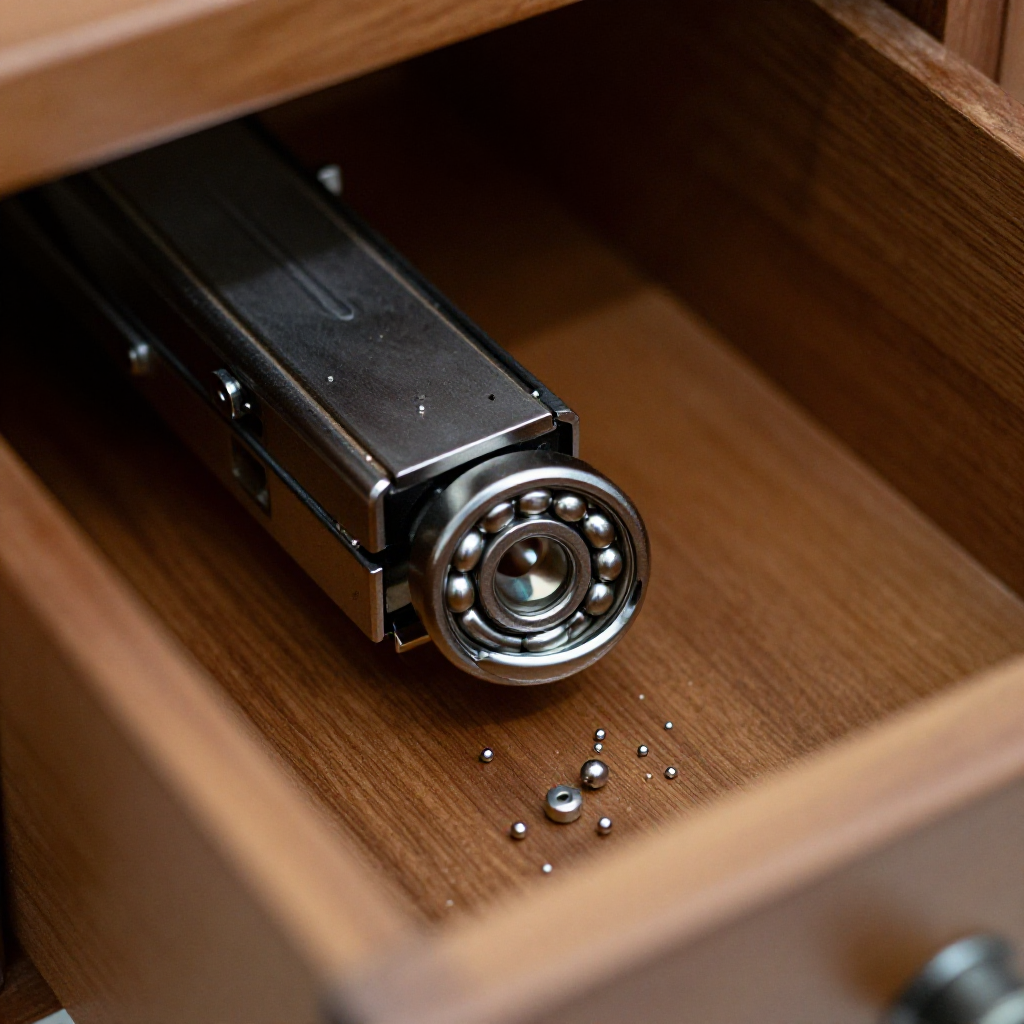
Drawer slides fail in predictable ways: the ball bearing retainer cage snaps and dumps its bearings inside the cabinet, the nylon roller wheel on epoxy-coated slides shatters and jams the slide, or the mounting screws pull out of particleboard cabinet walls. Kitchen drawers take the worst beating — pots and pans are heavy, and the constant open-close cycles wear slides out in 5-10 years. The drawer will sag on one side, scrape when closing, or bind halfway through its travel.

build_circle2. Try This First
Best First Step
Remove the drawer and diagnose exactly which slide failed

Remove the drawer and diagnose exactly which slide failed

Pull the drawer all the way out — most slides have a plastic release lever on each side. Push one lever up and the other down (or both inward), then lift the drawer out. Now slide each rail in and out by hand. The bad one will feel gritty, have visible missing ball bearings, or be locked up solid. Check the cabinet-side rail too — look for loose screws, stripped holes, or the rail itself bent from a past slam. If the cabinet screws are loose but the rail is good, you may just need toothpicks and glue to rebuild the screw holes.

visibility3. Visual Guidance

See what's happening and how to try the first recovery step.
1
Unscrew the old slide from the drawer box and cabinet
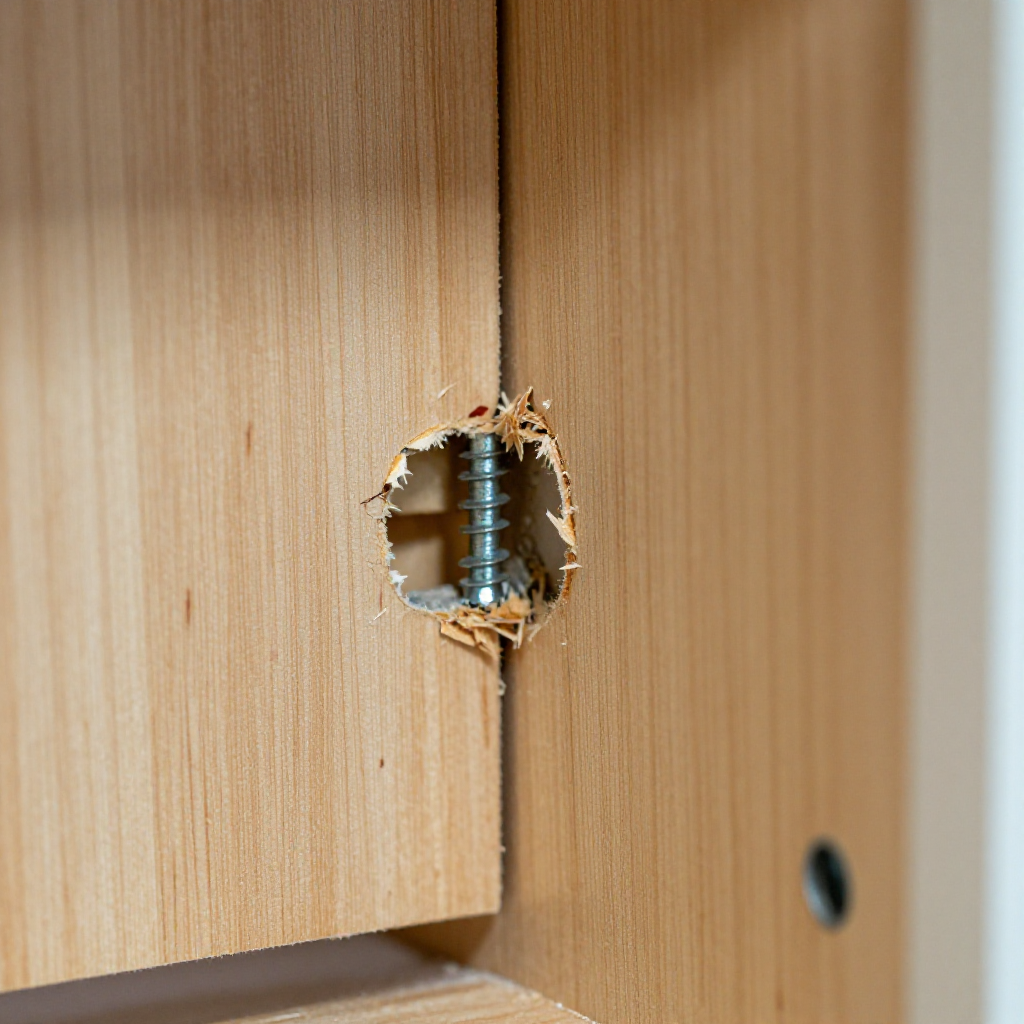
Unscrew the old slide from the drawer box and cabinetRemove the two or three screws holding the slide to the drawer box side — usually #2 Phillips or Pozidriv. Then unscrew the cabinet-side rail from the cabinet wall. Most slides have keyhole slots — loosen the screws, slide the rail forward, and lift it off. If the screws spin in stripped particleboard, set those aside for repair.
2
Mount the new slide — cabinet side first
Mount the new slide — cabinet side firstHold the new slide's cabinet rail against the cabinet wall, level with the old screw marks. Drive the rear screw first in the keyhole slot, then add the front screws. Use 5/8-inch #6 pan head screws for 1/2-inch plywood or 3/4-inch screws for 5/8-inch material. Slide the drawer member out, set the drawer box on it, and drive the drawer-side screws. Do both sides before testing.
3
Align and test the drawer action
Align and test the drawer actionBefore fully tightening the cabinet-side screws, close the drawer gently to check alignment. The drawer face should sit flush with the cabinet frame and the gap should be even on both sides. If it's crooked, loosen the cabinet-side screws, shift the rail up or down slightly, and retighten. Slide the drawer in and out 10 times — it should move smoothly and self-close if you bought soft-close slides.

autorenew4. If That Doesn't Work

Try the next recovery options.

construction
Repair stripped screw holes instead of replacing the slideIf the slide is fine but the screws pulled out of particleboard, pack the stripped holes with toothpicks and wood glue. Let it dry 30 minutes, snap off the excess, and drive the screws back in. For heavy drawers, drill out the stripped hole to 1/4 inch, glue in a hardwood dowel, and drill a new pilot hole.
chevron_right
upgrade
Upgrade to soft-close undermount slidesIf you're replacing slides anyway and the drawer box width is within 1/2 inch of the cabinet opening, Blum Tandem or similar undermount slides are a huge upgrade — invisible from the side, rated for 75-100 lbs, and they softly pull the drawer closed. They do cost $20-30 per pair versus $8-15 for side-mount.
chevron_right
sync
Swap both slides even if only one failedSlides wear as a pair. If one side's ball bearings are gone, the other side has been carrying uneven load and is on borrowed time. Slides are sold in pairs for a reason — replace both.
chevron_right

Frequently Asked Questions

How do I know what length drawer slide to buy?expand_more
Measure the depth of the drawer box — not the cabinet. Slides come in even-inch lengths from 10 to 28 inches. Buy slides 2 inches shorter than the cabinet depth. For example, a 22-inch cabinet takes 20-inch slides. The slide length is stamped on the old slide body — just match it.
What's the difference between side-mount and undermount slides?expand_more
Side-mount slides attach to the sides of the drawer box and are visible when the drawer is open. They require 1/2-inch clearance on each side. Undermount slides attach to the bottom of the drawer and are invisible — but they require the drawer box to be within 3/16 inch of the cabinet opening width, which most factory cabinets aren't.
My soft-close slides slam shut instead of slowing down. Are they broken?expand_more
Soft-close slides use a hydraulic damper that can fail if the drawer has been slammed repeatedly. On side-mount slides, the damper is a small black cylinder clipped to the rail — you can buy replacement dampers for $5-8 each without replacing the entire slide.

warning5. Stop DIY If

Don't continue if any of these apply.

reportThe cabinet wall itself is cracked, delaminating, or made of water-damaged particleboard — screws won't hold in disintegrating material. The cabinet box needs repair before slides will work.
reportThe drawer box joinery is failing — dovetails or dowels are cracked and the drawer box itself racks when pulled. New slides on a broken drawer box won't fix the problem.
reportThis is a heavy file drawer or tool drawer rated above 100 lbs — standard residential slides aren't designed for that weight. You need commercial-rated slides and reinforced mounting.
reportThe cabinet is under a stone countertop and the drawer opening is visibly out of square — the cabinet carcase has shifted. Forcing a slide into a racked opening will bind and fail.
Still stuck?Get personalized help with AI Recovery.

Related Recovery Problems

View all arrow_forward

Similar Failure Pattern

This page provides general DIY guidance.
If you're unsure, it's always best to consult a professional.