STUCKFIX
handymanDIY Friendly
table_bar

Dining Table Rocks Like a Boat in Rough Seas

That wobble isn't the floor — it's the leg joints working loose over years of holiday dinners and homework sessions. Tighten the right fastener and it's solid again.

Category:Furniture
Difficulty:Easy
Time:10-15 minutes
Success:95%
Updated:May 18, 2026

quick_referenceQuick Answer

For Dining Table Rocks Like a Boat in Rough Seas, start with "Flip the table and find the loose joint": Put a blanket down and flip the table upside down. Wiggle each leg — the one that moves is your target. Look at the corner block where the leg meets the apron rail. You'll see a bolt or a wood screw going through the block into the leg. Stop DIY if the leg itself is cracked or split down the middle. This is listed as a easy recovery and usually takes about 10-15 minutes.

verifiedGuide Snapshot

Repair areaFurniture
Estimated time10-15 minutes
DifficultyEasy
Stop conditions3

Last updated May 18, 2026. Review the stop conditions before continuing.

help1. Understand the Problem

Wood expands and contracts with humidity. Every cycle loosens the hardware connecting the legs to the apron. The corner blocks take most of the abuse. People shove folded napkins under the short leg for years instead of spending ten minutes with a wrench.

build_circle2. Try This First
Best First Step
Flip the table and find the loose joint

Flip the table and find the loose joint

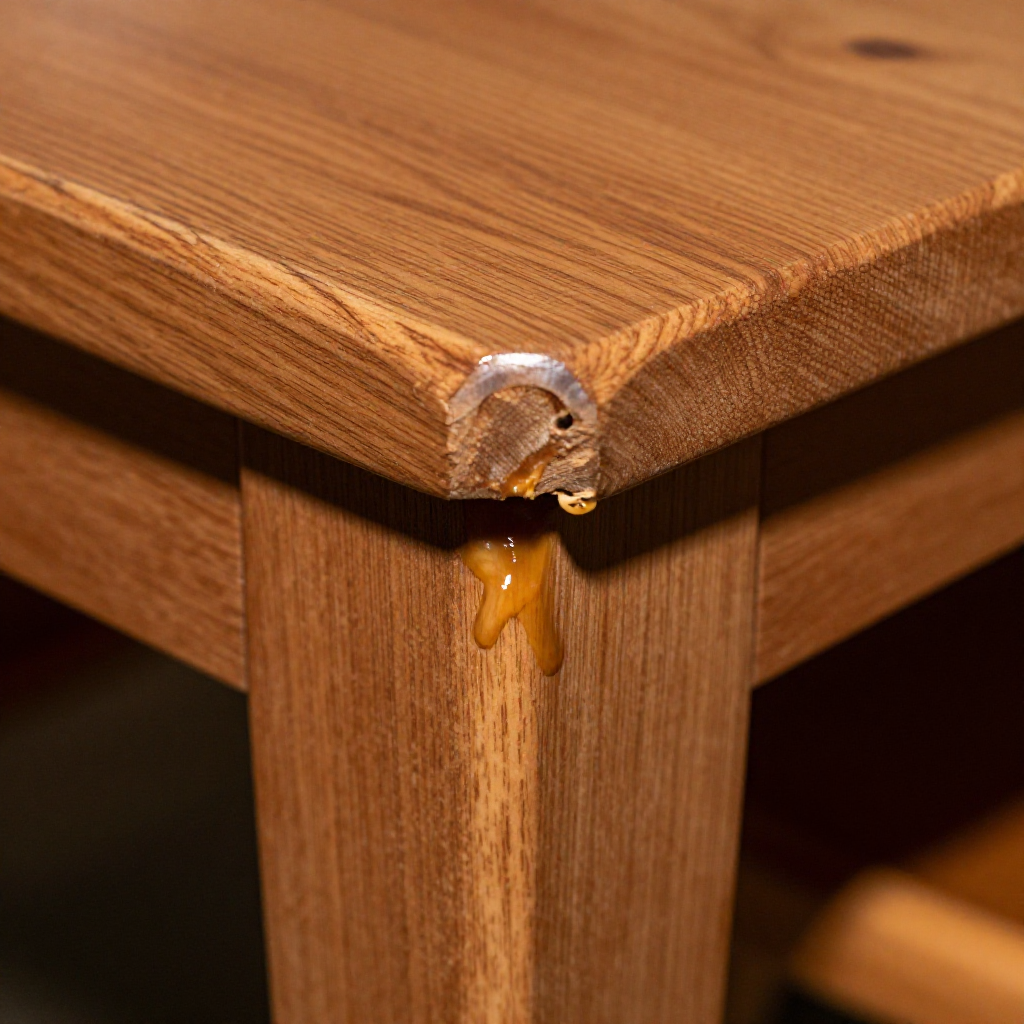
Put a blanket down and flip the table upside down. Wiggle each leg — the one that moves is your target. Look at the corner block where the leg meets the apron rail. You'll see a bolt or a wood screw going through the block into the leg.

visibility3. Visual Guidance

See what's happening and how to try the first recovery step.
1
Tighten the corner block hardware
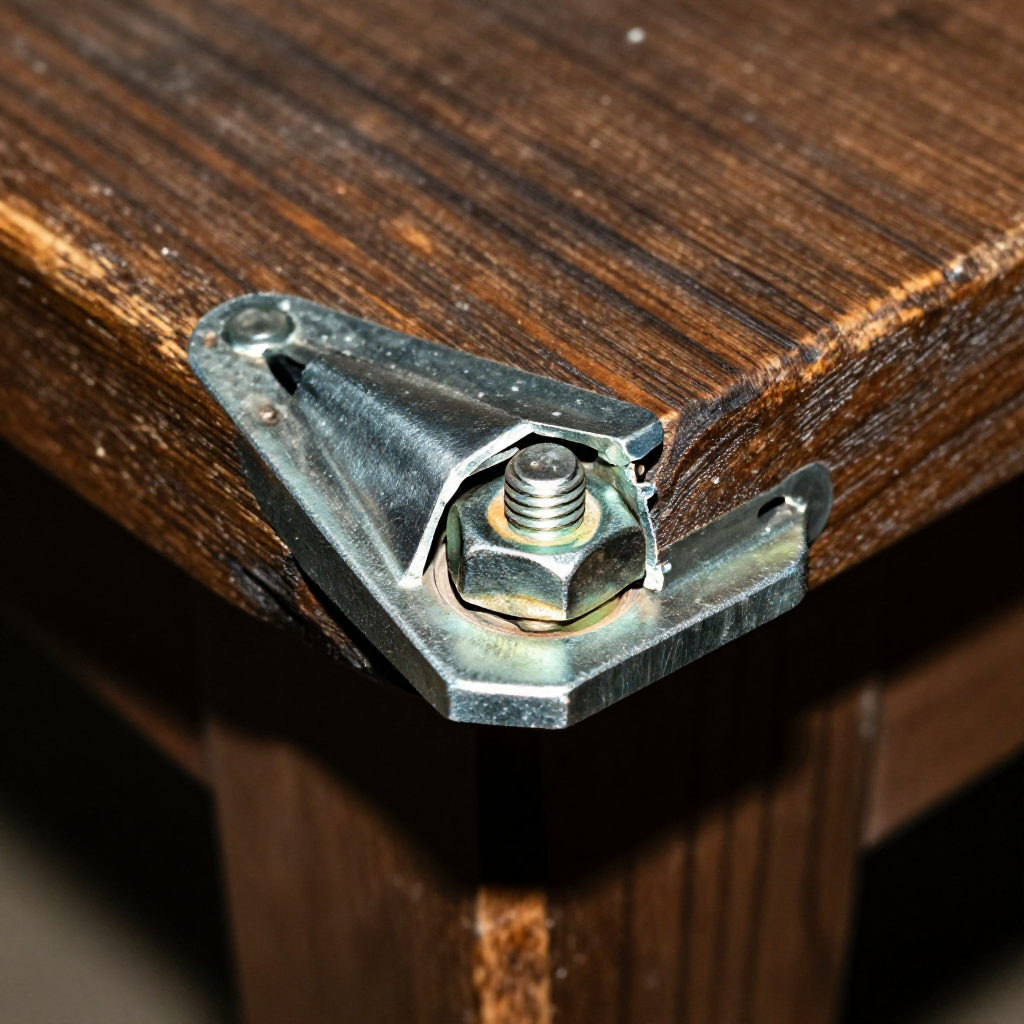
Tighten the corner block hardwareIf it's a bolt with a nut, grab a socket or wrench and crank it down. If it's a wood screw and it just spins, the hole is stripped — skip to the next step. Tighten every corner block while you're under there, not just the wobbly one.
2
Fix a stripped screw hole with toothpicks and glue
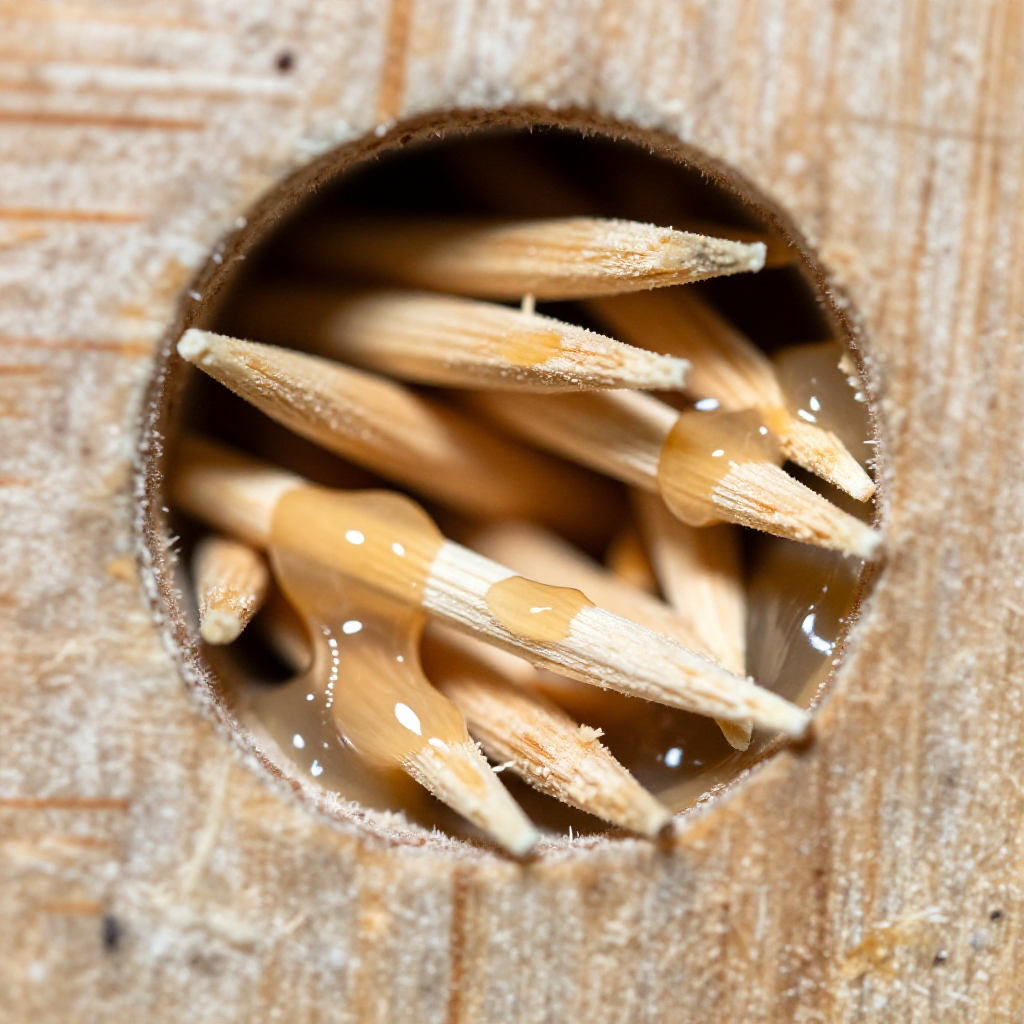
Fix a stripped screw hole with toothpicks and gluePull the screw out. Squirt wood glue into the hole, then cram in as many flat toothpicks as will fit. Snap them off flush. Wait 15 minutes for the glue to grab, then drive the screw back in. The toothpick fibers give the threads fresh wood to bite into.
3
Check the leg levelers
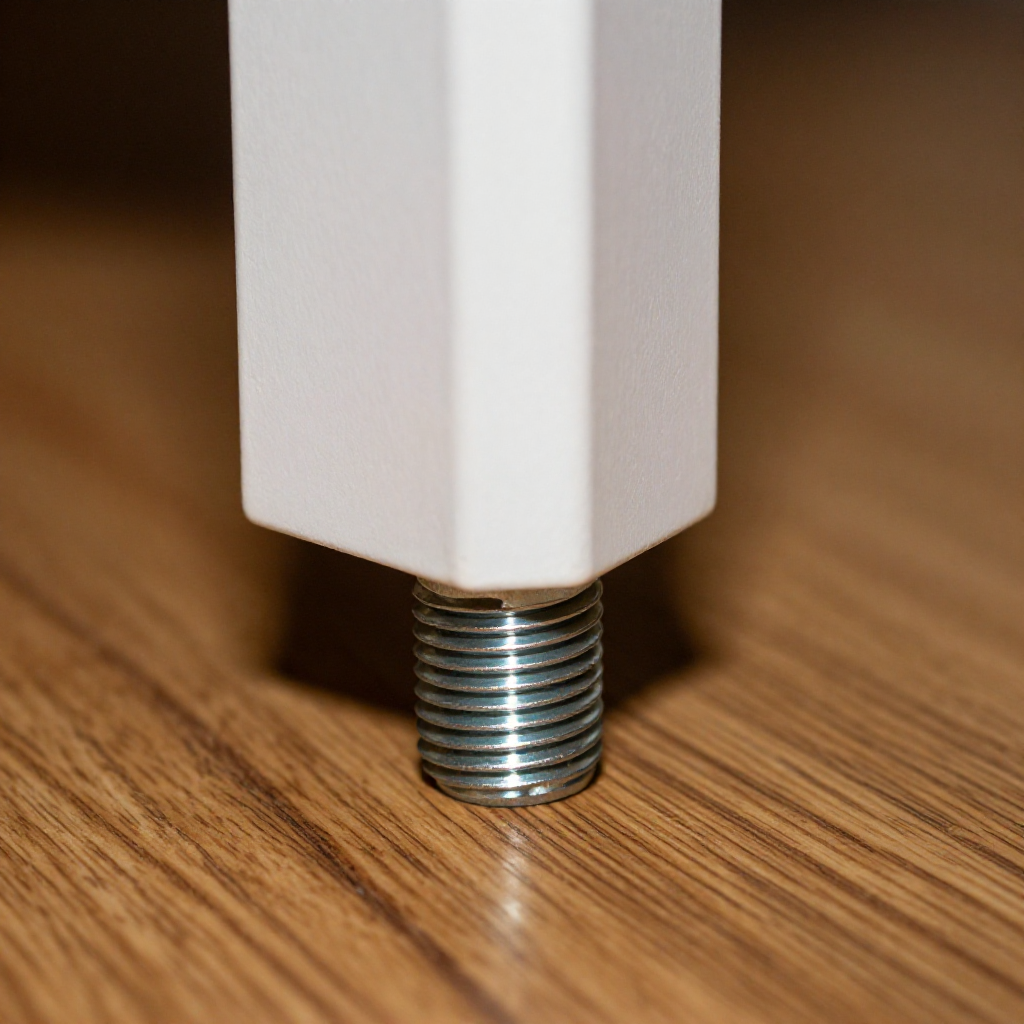
Check the leg levelersMost tables have adjustable feet — little plastic or metal caps threaded into the bottom of each leg. If one leg is shorter, unscrew its foot a few turns. A 1/8-inch adjustment stops the rock.

autorenew4. If That Doesn't Work

Try the next recovery options.

hardware
Add new corner braces if the original is brokenSteel L-brackets from the hardware store work fine. Screw one leg of the bracket into the apron and the other into the leg. Pre-drill the holes so you don't split the wood.
chevron_right

Frequently Asked Questions

The bolt is tight but the table still wobbles. What gives?expand_more
One leg is physically shorter than the others. Adjust the foot leveler, or if there isn't one, stick a felt furniture pad on the short leg. In old houses, floors are never perfectly level.
Can I use toothpicks without glue?expand_more
You can, but it'll loosen again in a few months. The glue is what makes it permanent. Use wood glue, not white school glue.
My table has metal legs with no visible fasteners — how do I fix it?expand_more
Look under the tabletop for a mounting plate. The screws holding the plate to the wood probably loosened. Tighten them. If the metal leg tube itself is loose at the weld, you need a new leg.

warning5. Stop DIY If

Don't continue if any of these apply.

reportThe leg itself is cracked or split down the middle
reportThe apron rail joint has completely separated from the tabletop
reportIt's an antique with glued mortise-and-tenon joinery — call a furniture restorer
Still stuck?Get personalized help with AI Recovery.

Related Recovery Problems

View all arrow_forward

This page provides general DIY guidance.
If you're unsure, it's always best to consult a professional.