STUCKFIX
handymanDIY Friendly
ac_unit

AC Running but Not Blowing Cold? The Capacitor or Contactor Is Shot

Your outdoor AC unit hums but the air from the vents is warm. The run capacitor has failed — a $15 part that kills cooling when it dies. Fix it in 20 minutes.

Category:HVAC
Difficulty:Moderate
Time:20 min
Success:50%
Updated:May 22, 2026

quick_referenceQuick Answer

For AC Running but Not Blowing Cold? The Capacitor or Contactor Is Shot, start with "Kill the breaker and discharge the capacitor — it stores a lethal charge": Stop resetting the breaker hoping the AC will magically work. Go to the main panel and turn off the double-pole breaker for the AC (usually 30-50A). Go to the outdoor disconnect box next to the condenser and pull the disconnect plug or flip the switch to OFF. The capacitor can hold 370-440V for hours after power is cut. Discharge it by placing an insulated screwdriver across the terminals one at a time — expect a loud pop. If you're not comfortable with this, call a pro. Stop DIY if the capacitor discharged with a weak pop or no pop at all — it wasn't holding a charge, which is expected for a failed cap. but if you're unsure about safe discharge, stop. This is listed as a moderate recovery and usually takes about 20 min.

verifiedGuide Snapshot

Repair areaHVAC
Estimated time20 min
DifficultyModerate
Stop conditions4

Last updated May 22, 2026. Review the stop conditions before continuing.

account_treeRecovery State

Current stateNot Blowing Cold
Specific stateCapacitor Failed
Failed stepCompressor Startup
Likely failure typeElectrical Fault
DIY boundaryDIY recovery first
paymentsCost decision

help1. Understand the Problem

The capacitor gives the compressor and fan motor the starting jolt and running boost they need. Over time — especially in hot climates — capacitors degrade from heat exposure. When the capacitor fails, the compressor can't start or the condenser fan won't spin, so the refrigerant never sheds its heat. The system runs but the air stays warm.

build_circle2. Try This First
Best First Step
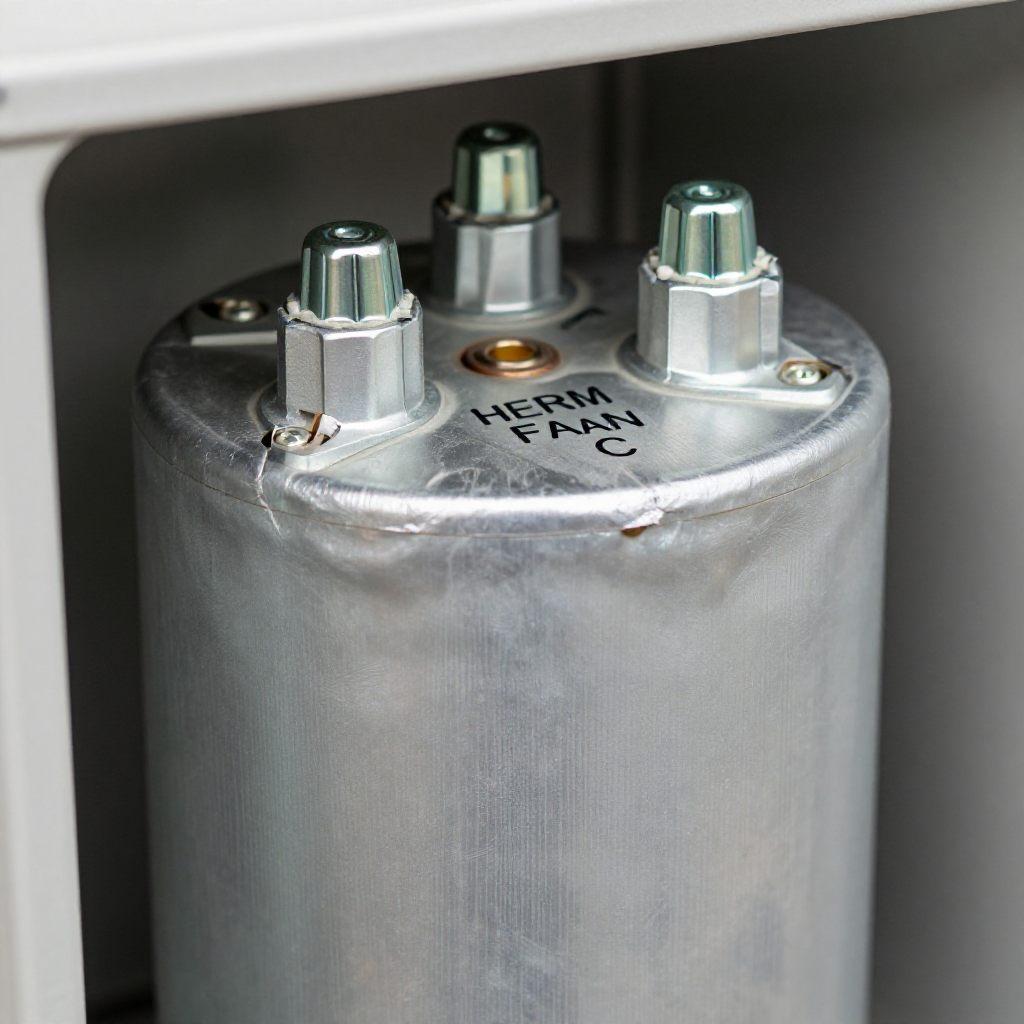
Kill the breaker and discharge the capacitor — it stores a lethal charge

Kill the breaker and discharge the capacitor — it stores a lethal charge

Stop resetting the breaker hoping the AC will magically work. Go to the main panel and turn off the double-pole breaker for the AC (usually 30-50A). Go to the outdoor disconnect box next to the condenser and pull the disconnect plug or flip the switch to OFF. The capacitor can hold 370-440V for hours after power is cut. Discharge it by placing an insulated screwdriver across the terminals one at a time — expect a loud pop. If you're not comfortable with this, call a pro.

visibility3. Visual Guidance

See what's happening and how to try the first recovery step.
1
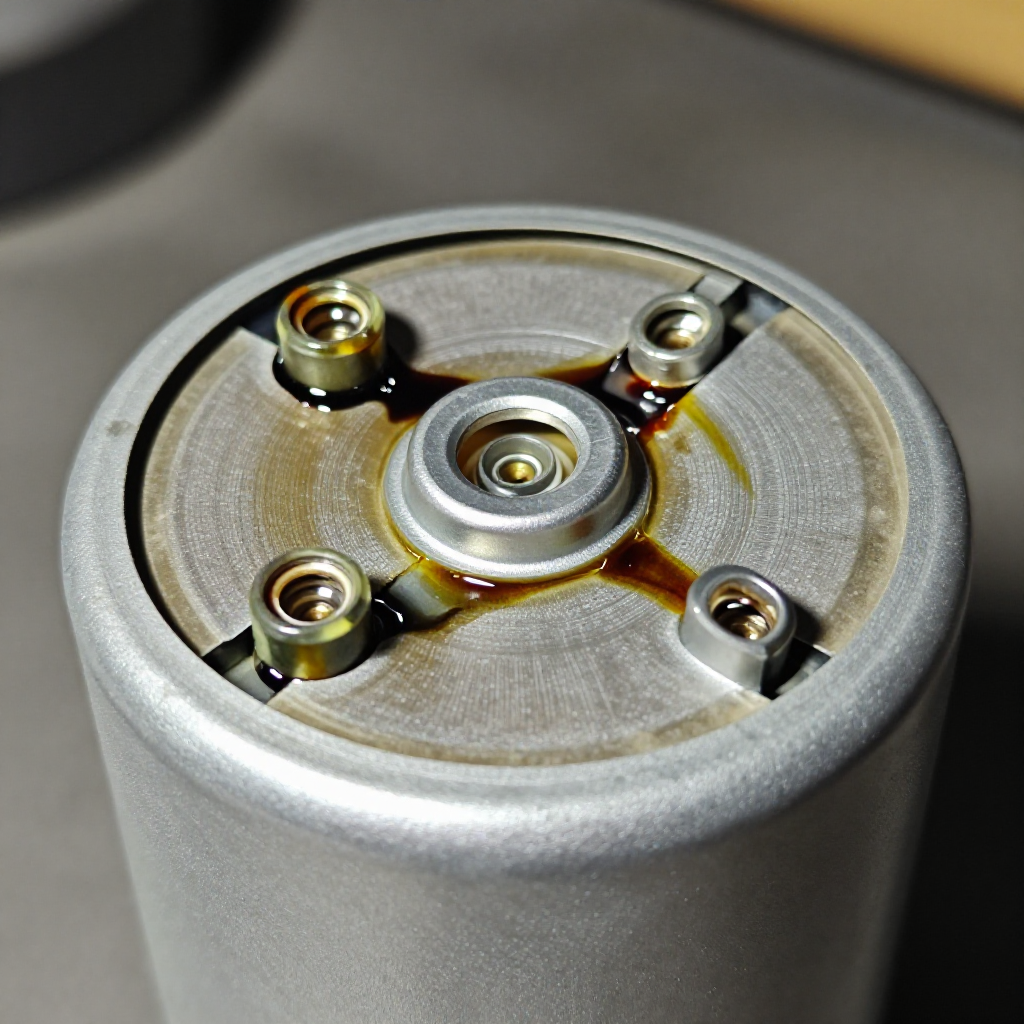
Remove and check the capacitor — look for bulging or oil leaks
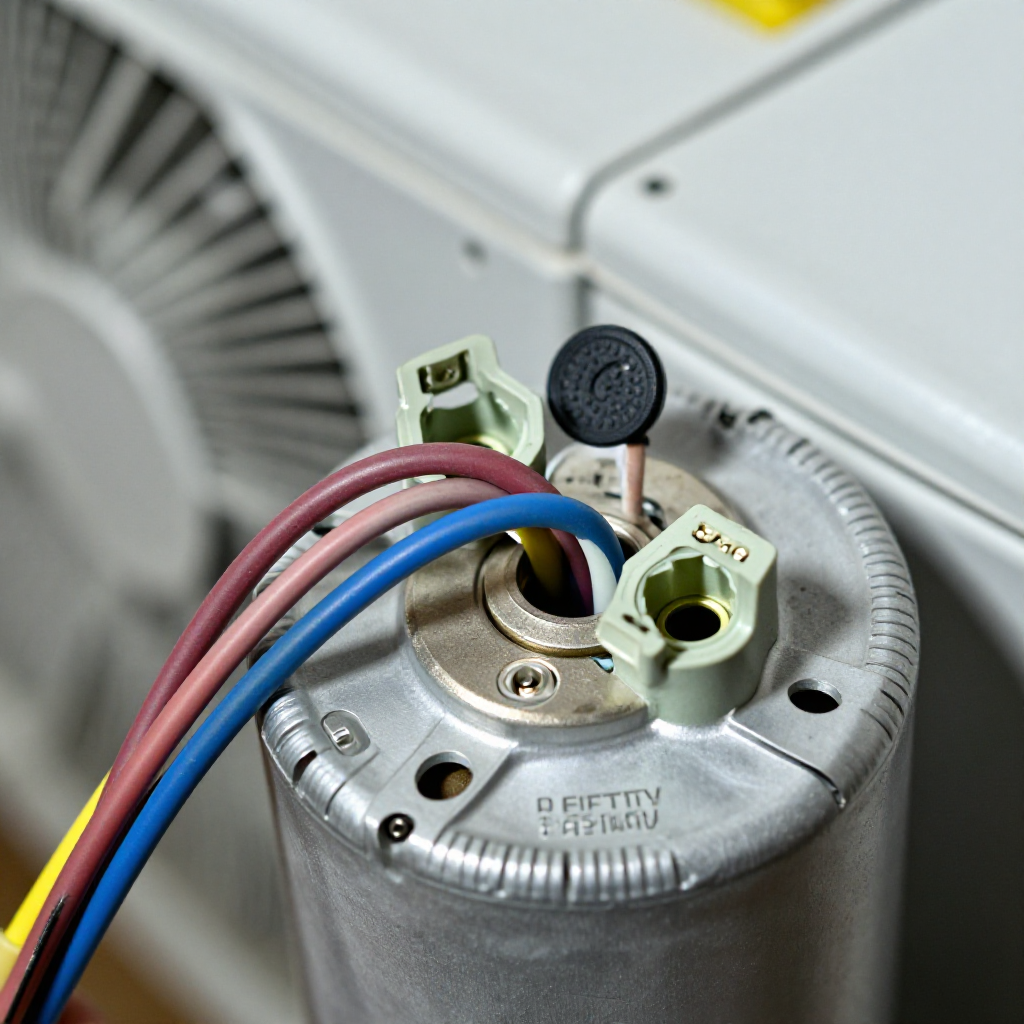
Remove and check the capacitor — look for bulging or oil leaksTake a photo of the wiring on the capacitor terminals — you MUST reconnect them exactly. Disconnect the wires (one at a time). The capacitor is held by a metal strap with one screw. Pull it out and look at the top. If the top is domed upward instead of flat, it's failed internally. If there's oil leaking from the seams or wire terminals, it's ruptured. Even if it looks normal, a weak capacitor can cause hard starting — but visual failure means immediate replacement.
2
Match the microfarad (MFD) rating and voltage exactly
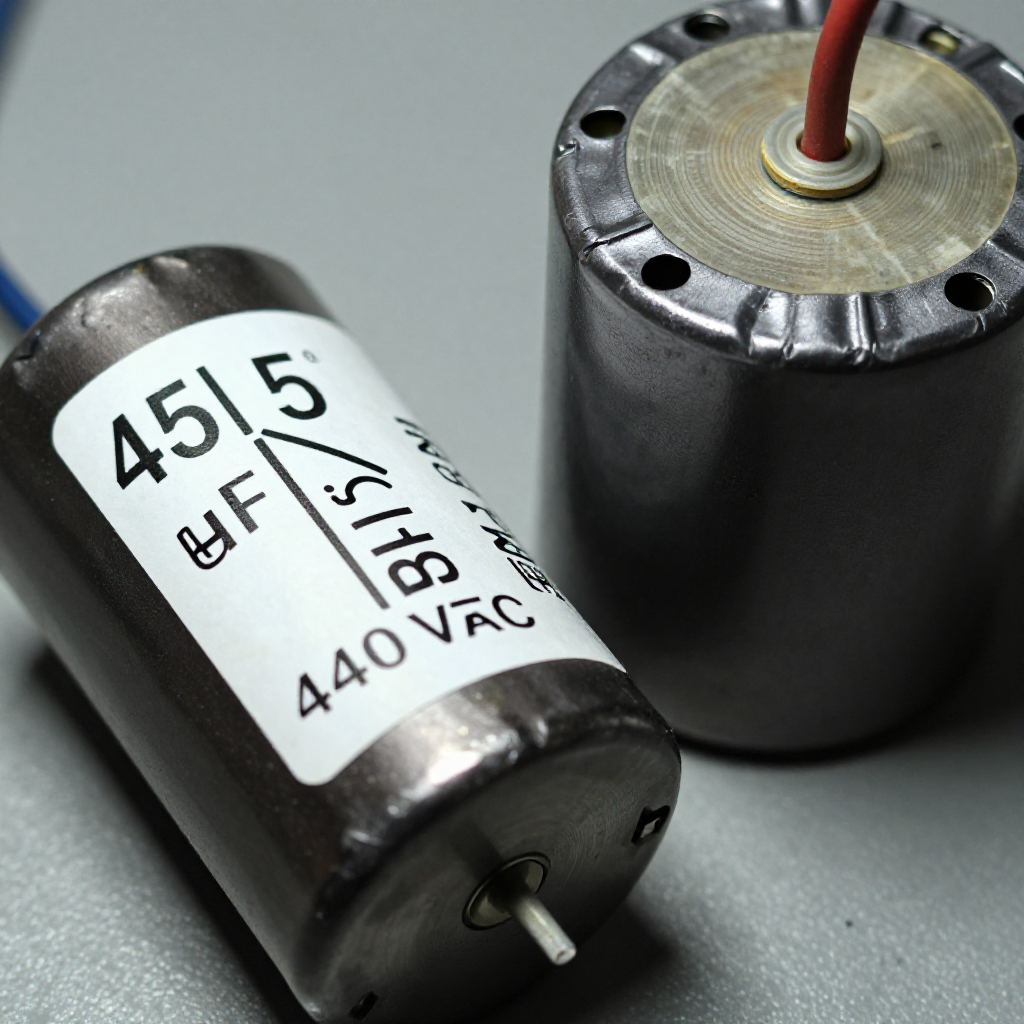
Match the microfarad (MFD) rating and voltage exactlyRead the label on the side of the old capacitor. It will show something like '45/5 MFD 370VAC'. The first number is for the compressor (HERM), the second for the fan (FAN), and the third for common (C). Buy a replacement with the SAME MFD ratings. You can go UP on voltage (440V is fine for a 370V unit) but NEVER change the MFD — a 50/7.5 in place of a 45/5 will burn out the compressor windings.
3
Install the new capacitor and test the AC
Install the new capacitor and test the ACStrap the new capacitor in place. Reconnect wires exactly as they were — HERM to compressor, FAN to fan motor, C to contactor common. Put the disconnect plug back in, turn the breaker on, and set the thermostat to COOL. Go outside and listen. The compressor should kick on with a solid thunk (not a rapid clicking) and the fan should spin at full speed with no humming. Feel the smaller copper line at the condenser — it should be warm, confirming the compressor is pumping.

autorenew4. If That Doesn't Work

Try the next recovery options.

electrical_services
Replace the contactor if the unit buzzes but the compressor and fan don't runThe contactor is the heavy-duty relay that engages when the thermostat calls for cooling. If you hear a loud buzz from the outdoor unit but nothing runs, the contactor coil has failed or the contacts are pitted and burned. A new contactor is $15-25.
chevron_right
cleaning_services
Clean the condenser coils — dirty coils cause high head pressure and kill capacitorsDirty condenser coils force the compressor to work against high pressure. Over time this overheats the capacitor. Spray the coils from the inside out with a garden hose (not a pressure washer — you'll bend the fins). Use coil cleaner spray for heavy grime.
chevron_right

Frequently Asked Questions

How long do AC capacitors last?expand_more
In hot climates like the southern US, 3-5 years. In moderate climates, 5-10 years. Power surges, dirty condenser coils that raise operating temperature, and frequent short-cycling all shorten capacitor life dramatically.
Can I use a higher voltage capacitor than the original?expand_more
Yes. A 440V capacitor can replace a 370V unit safely — higher voltage rating just means more headroom. Never go lower voltage. And never, ever change the MFD (capacitance) rating — that will damage the compressor.
Why does my AC make a humming noise outside but the fan doesn't spin?expand_more
This is the classic failed run capacitor symptom. The compressor is trying to start but can't get the phase shift it needs. Or the fan capacitor section failed. Either way, kill the breaker immediately — a stalled motor draws locked-rotor amps and will burn out in minutes.
Is it worth replacing the capacitor myself or should I call a pro?expand_more
A capacitor swap is the #1 most common DIY AC repair. A $15-25 part that an HVAC company charges $200-400 to replace. The main risk is not properly discharging the old capacitor — it can hold a dangerous charge. If you can safely discharge it (insulated screwdriver across terminals), the rest is plug-and-play.

warning5. Stop DIY If

Don't continue if any of these apply.

reportThe capacitor discharged with a weak pop or no pop at all — it wasn't holding a charge, which is expected for a failed cap. But if you're unsure about safe discharge, stop.
reportThe compressor buzzes for 2-3 seconds then clicks off repeatedly — this is a locked rotor, not a capacitor problem. The compressor itself has seized.
reportYou see ice on the larger insulated copper line (suction line) at the outdoor unit — the system is low on refrigerant or has a restriction. Requires an EPA-certified tech.
reportThe capacitor compartment or contactor area has burn marks, melted wires, or a burned electrical smell — there's been a short or arc fault. Call an HVAC electrician.
Still stuck?Get personalized help with AI Recovery.

Related Recovery Problems

View all arrow_forward

Similar Failure Pattern

This page provides general DIY guidance.
If you're unsure, it's always best to consult a professional.