STUCKFIX
handymanDIY Friendly
local_fire_department

Gas Stove Burner Won't Light After You Took It Apart to Clean

You cleaned the burner, put it back together, and now it won't light. The fix is almost always alignment or moisture — not a broken part. Get it firing again.

Category:Kitchen
Difficulty:Easy
Time:10 min
Success:50%
Updated:May 26, 2026

quick_referenceQuick Answer

For Gas Stove Burner Won't Light After You Took It Apart to Clean, start with "Dry every surface and re-seat the burner cap": Do not take anything else apart — more disassembly right now makes it harder to find the mistake. Pull the burner cap off and wipe every surface bone-dry with a paper towel: the cap underside, the burner head, and the area around the igniter electrode. Any moisture — even from a damp sponge — creates a path for the spark to jump somewhere other than the gas. Re-seat the cap so it sits flat and centered with a slight wiggle to confirm it's fully engaged on the alignment notches. Stop DIY if you smell gas when the burner knob is in the off position — that is a gas supply or valve leak, not an igniter problem. This is listed as a easy recovery and usually takes about 10 min.

verifiedGuide Snapshot

Repair areaKitchen
Estimated time10 min
DifficultyEasy
Stop conditions4

Last updated May 26, 2026. Review the stop conditions before continuing.

account_treeRecovery State

DeviceGas Oven
Current stateNot Lighting
Specific stateAfter Cleaning Reassembly
Failed stepBurner Reassembly
Likely failure typeReassembly Error
DIY boundaryDIY recovery first
paymentsCost decision

help1. Understand the Problem

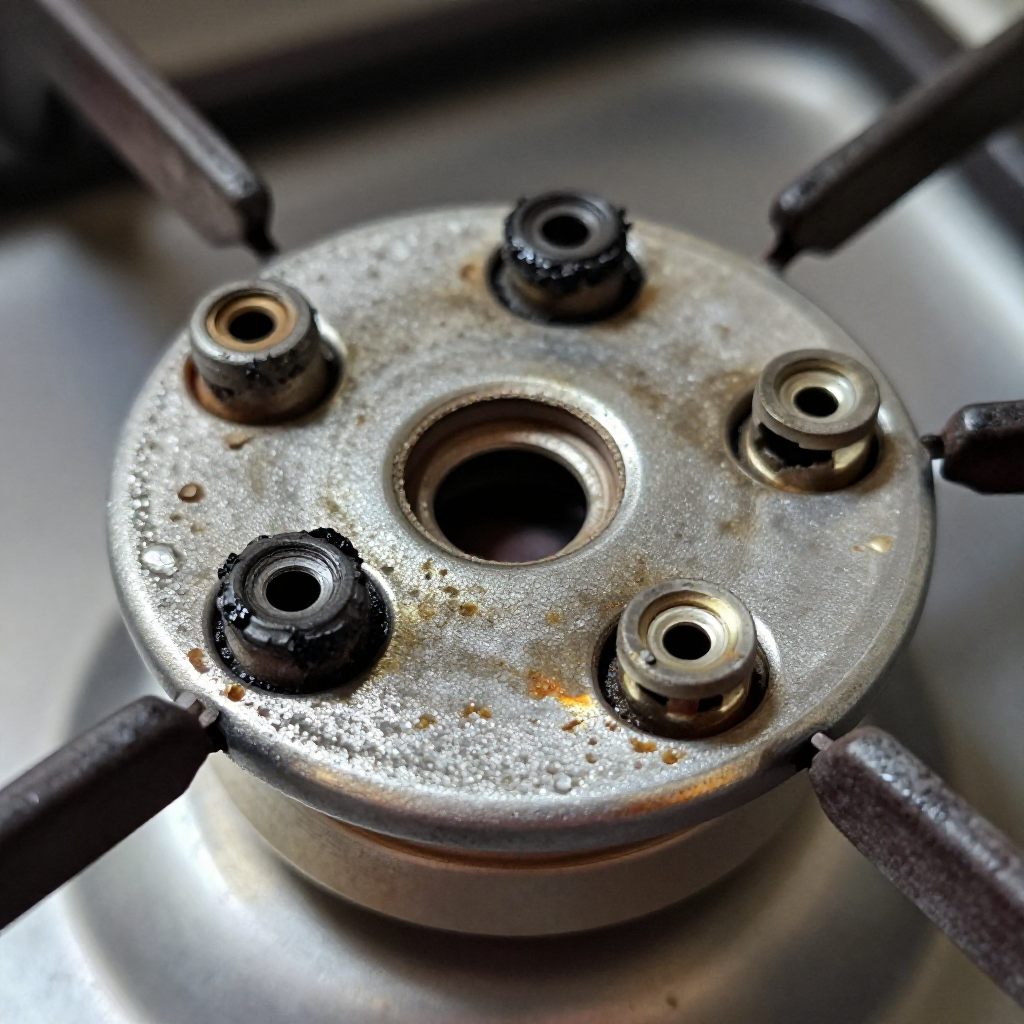
A gas burner that won't light after cleaning is almost never a failed part — it is almost always a reassembly problem. The most common causes are: the burner cap is seated crooked and the gas ports don't line up with the igniter, water or cleaner residue is shorting the spark to the wrong place, or the igniter electrode got bumped out of position during cleaning and the spark gap is now too wide to ignite gas.

build_circle2. Try This First
Best First Step
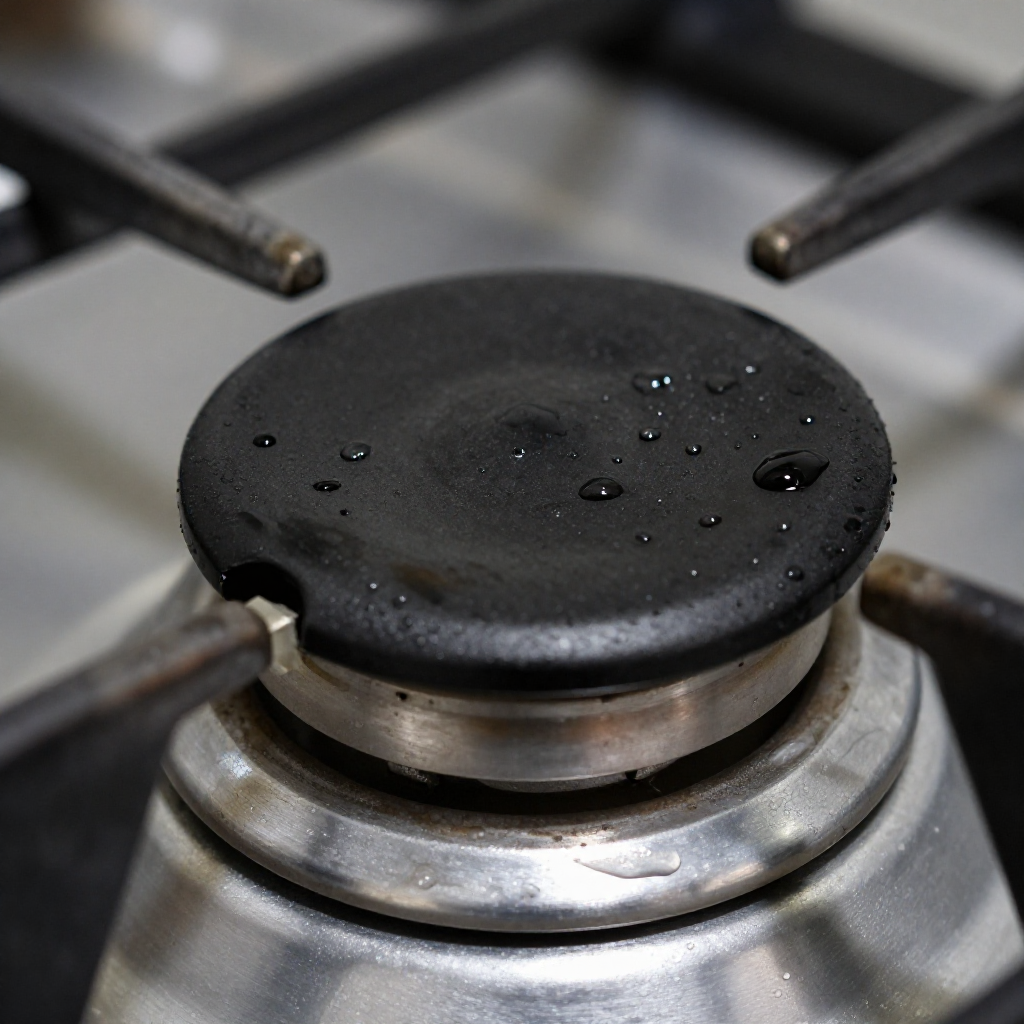
Dry every surface and re-seat the burner cap

Dry every surface and re-seat the burner cap

Do not take anything else apart — more disassembly right now makes it harder to find the mistake. Pull the burner cap off and wipe every surface bone-dry with a paper towel: the cap underside, the burner head, and the area around the igniter electrode. Any moisture — even from a damp sponge — creates a path for the spark to jump somewhere other than the gas. Re-seat the cap so it sits flat and centered with a slight wiggle to confirm it's fully engaged on the alignment notches.

visibility3. Visual Guidance

See what's happening and how to try the first recovery step.
1
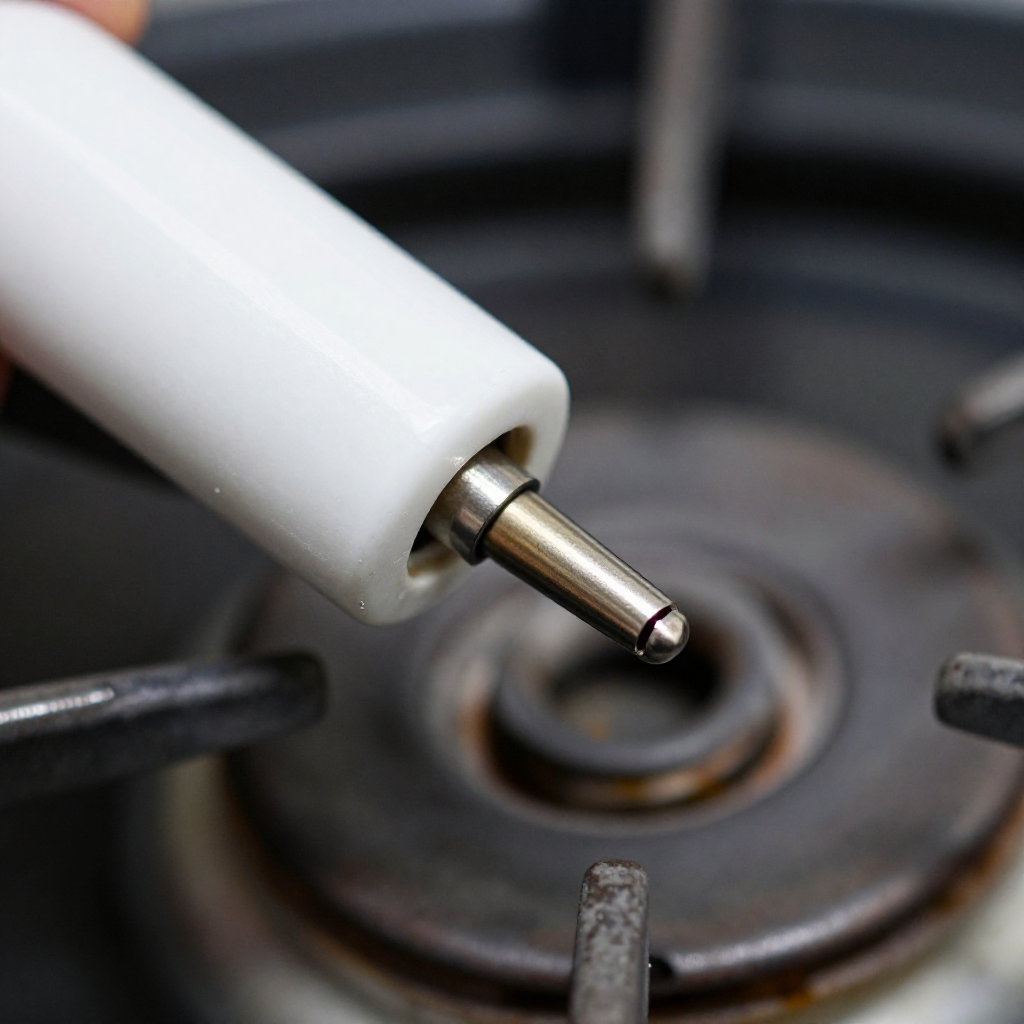
Check the igniter spark gap alignment
Check the igniter spark gap alignmentWith the lights off so you can see the spark clearly, turn the burner knob to the LITE position. Watch where the spark jumps. The spark should arc from the tip of the white ceramic igniter electrode to the edge of the burner head — a gap of about 1/8 inch. If the spark shoots sideways to the burner cap or arcs to a different spot, carefully bend the electrode bracket with a pair of needle-nose pliers to re-center it.
2
Clean the igniter electrode tip with rubbing alcohol
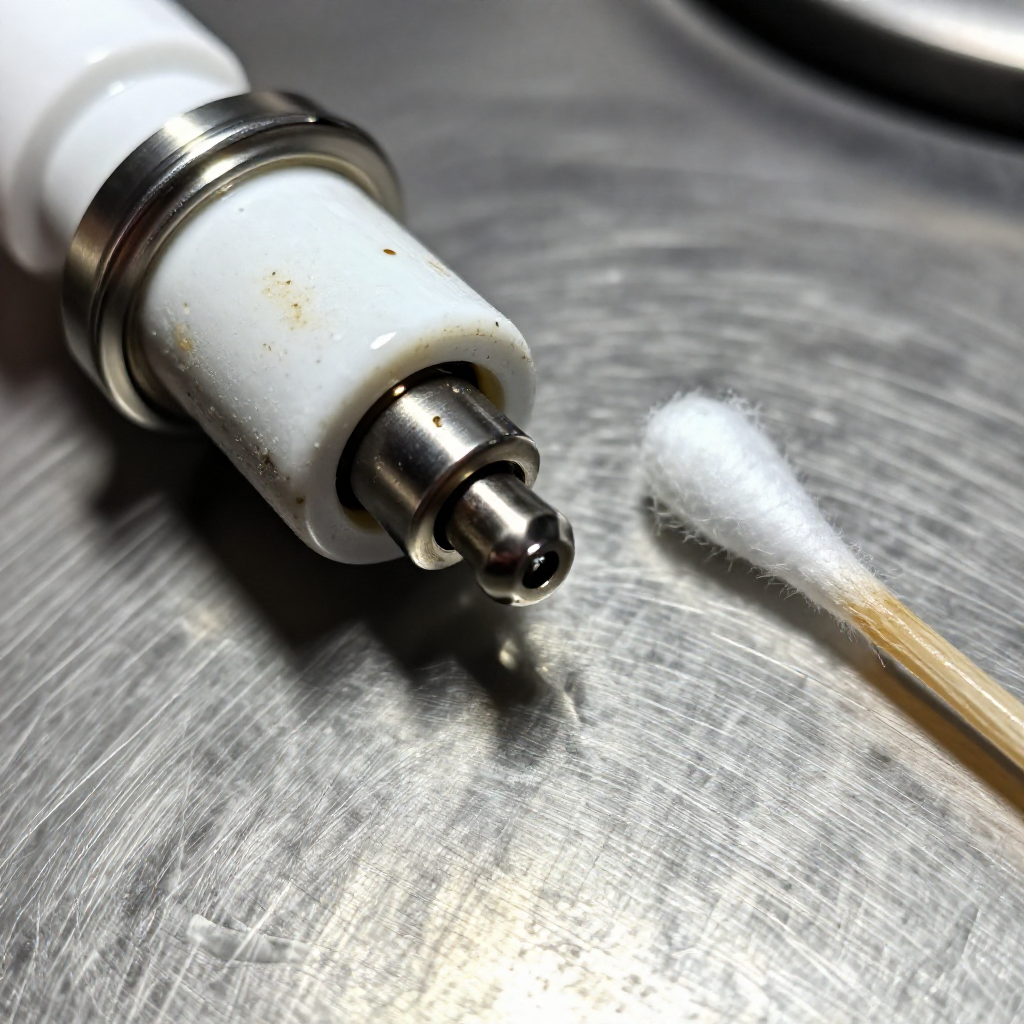
Clean the igniter electrode tip with rubbing alcoholIf the burner cap was dripping wet when you reassembled it, cleaner residue on the ceramic igniter can cause the spark to track across the insulator instead of jumping the gap. Dip a cotton swab in rubbing alcohol and clean the white ceramic body of the igniter and the metal electrode tip. Let it evaporate completely — about 30 seconds — before testing again.
3
Clear the burner ports with a paper clip
Clear the burner ports with a paper clipIf the burner cap is dry and correctly seated but one section won't light, the gas ports along the burner head rim may be clogged with cleaner residue or cooked-on food. Straighten a paper clip and gently ream each port. Do not use a toothpick — wood splinters can lodge in the port and block gas flow permanently.

autorenew4. If That Doesn't Work

Try the next recovery options.

local_fire_department
Use a long-reach lighter as a temporary workaroundIf the igniter is still not cooperating but you need to cook, hold a long-reach barbecue lighter near the burner ports and turn on the gas. Light the burner manually. This buys you time while you troubleshoot.
chevron_right
swap_horiz
Replace the igniter electrodeIf the ceramic housing is cracked or the metal tip is corroded white, the electrode itself has failed. Replacement electrodes are $10-$20 and plug into a wire connector under the cooktop — no splicing required.
chevron_right

Frequently Asked Questions

Why won't my gas stove burner light even though I hear clicking?expand_more
If you hear the igniter clicking but no flame, the spark is likely finding a path through moisture or grime instead of jumping the gap to the burner. Dry everything and clean the electrode with alcohol.
Does water in the burner cap stop it from lighting?expand_more
Yes. Water or cleaner residue on the igniter or burner cap creates an unwanted electrical path that shorts the spark. Dry all surfaces completely before reassembling.
How far should the igniter be from the burner?expand_more
The spark gap should be about 1/8 inch from the tip of the electrode to the edge of the burner head. Too wide and the spark can't jump. Too close and there's no room for the gas to mix with air.
Can I light a gas stove burner with a lighter if the igniter is broken?expand_more
Yes, temporarily. Use a long-reach barbecue lighter, hold it near the burner ports, then turn on the gas. Never lean over the burner while doing this — the flame can flare up.

warning5. Stop DIY If

Don't continue if any of these apply.

reportYou smell gas when the burner knob is in the OFF position — that is a gas supply or valve leak, not an igniter problem.
reportThe igniter sparks but the burner still won't light with a match — gas is not reaching the burner head, which means a valve or supply line blockage.
reportYou see sparks arcing from the wire harness under the cooktop instead of at the burner — exposed wiring is a fire and shock hazard.
reportThe burner flames are orange or yellow instead of blue after lighting — incomplete combustion can generate carbon monoxide.
Still stuck?Get personalized help with AI Recovery.

Related Recovery Problems

View all arrow_forward

Same Device Recovery States

Device index arrow_forward

Similar Failure Pattern

This page provides general DIY guidance.
If you're unsure, it's always best to consult a professional.