STUCKFIX
handymanDIY Friendly
weekend

Office Chair Leans to One Side and Feels Uneven

An office chair that tilts to one side strains your back and makes sitting miserable. Learn how to diagnose the cause and level it back up without replacing the whole chair.

Category:Furniture
Difficulty:Moderate
Time:20 min
Success:50%
Updated:May 28, 2026

quick_referenceQuick Answer

For Office Chair Leans to One Side and Feels Uneven, start with "Tighten the tilt mechanism bolts under the seat plate": Stop sitting in the chair for now — repeated leaning will make it worse. Flip the chair upside down onto a towel to protect the armrests. Locate the four bolts where the seat plate attaches to the tilt mechanism. Use a socket wrench or Allen key to snug each bolt down evenly. If one bolt spins freely without tightening, the threaded insert may have stripped — stop and move to an alternative method before the plate cracks. Stop DIY if the gas cylinder is bent sharply enough that it scores the inside of the base — this can suddenly release pressure and collapse. This is listed as a moderate recovery and usually takes about 20 min.

verifiedGuide Snapshot

Repair areaFurniture
Estimated time20 min
DifficultyModerate
Stop conditions4

Last updated May 28, 2026. Review the stop conditions before continuing.

account_treeRecovery State

Current stateLeaning To One Side
Specific stateUneven Sitting Surface
Failed stepSeat Tilt Adjustment
Likely failure typeMisalignment
DIY boundaryDIY recovery first
paymentsCost decision

help1. Understand the Problem

A chair that leans to one side often happens when the gas cylinder is bent, the tilt mechanism bolts have loosened, or the base plate has cracked under repeated loading. It can also happen if one caster has worn down more than the others or if the floor underneath is uneven. The good news is most lean issues are adjustable at the mechanism level — you rarely need a whole new chair.

build_circle2. Try This First
Best First Step
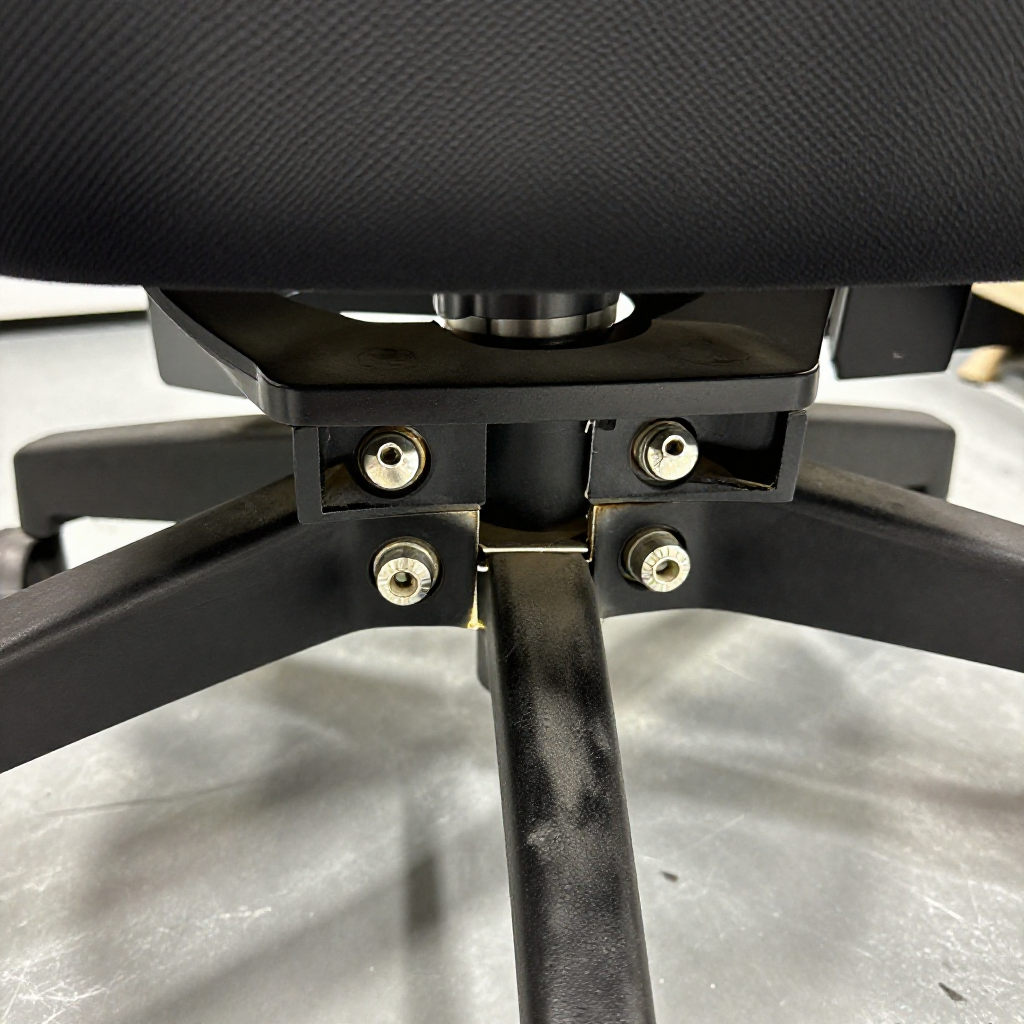
Tighten the tilt mechanism bolts under the seat plate

Tighten the tilt mechanism bolts under the seat plate

Stop sitting in the chair for now — repeated leaning will make it worse. Flip the chair upside down onto a towel to protect the armrests. Locate the four bolts where the seat plate attaches to the tilt mechanism. Use a socket wrench or Allen key to snug each bolt down evenly. If one bolt spins freely without tightening, the threaded insert may have stripped — stop and move to an alternative method before the plate cracks.

visibility3. Visual Guidance

See what's happening and how to try the first recovery step.
1
Check the gas cylinder for bending or play
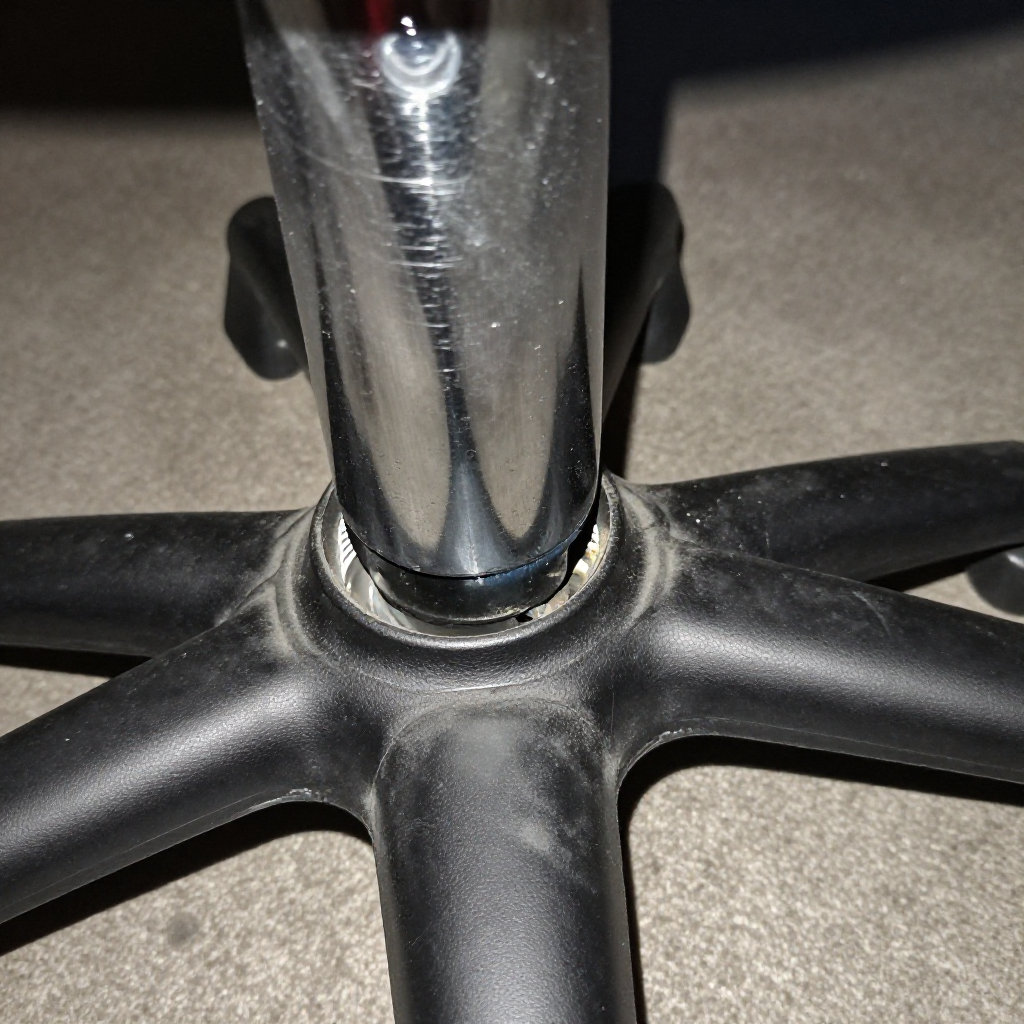
Check the gas cylinder for bending or playWith the chair upright, grab the seat at both sides and try to rock it side to side. If you feel play between the cylinder and the base, inspect where the cylinder enters the five-star base. A bent cylinder will show an uneven gap around the plastic shroud. If the cylinder is visibly bent, it needs replacement — do not try to straighten it.
2
Inspect all five casters for uneven wear
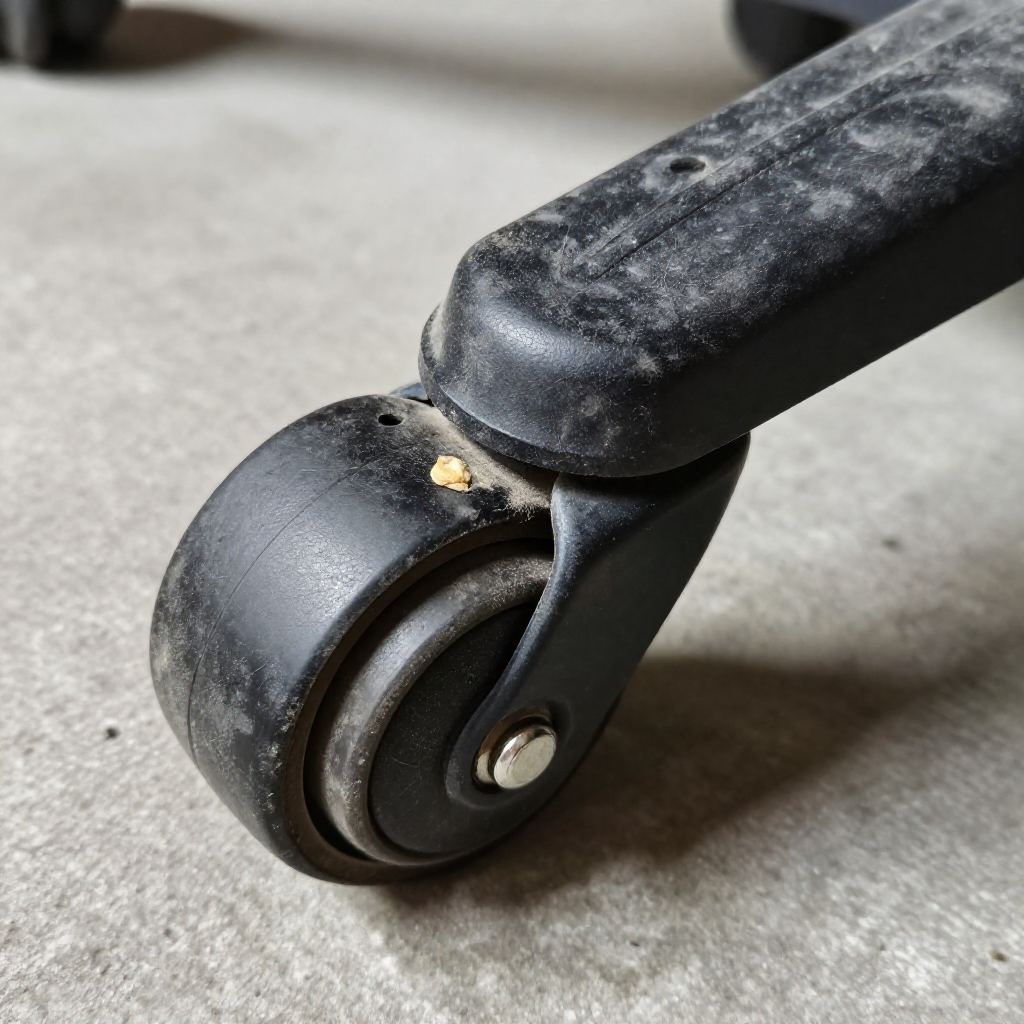
Inspect all five casters for uneven wearRemove each caster by pulling firmly while gripping the stem with pliers if needed. Roll each one across a flat surface and look for flat spots, wobble, or debris wrapped around the wheel axle. Replace any caster that rolls unevenly. Reinstall and test the chair on a hard flat surface before sitting.
3
Verify the floor surface is actually level
Verify the floor surface is actually levelPlace a carpenter's level on the floor where the chair sits. If you're on carpet over an old subfloor, small dips and crowns can tilt the entire chair base. Try the chair on a plastic chair mat or in a different spot. If the floor is the problem, a rigid chair mat is the simplest fix — shimming casters is never a safe solution on a rolling chair.

autorenew4. If That Doesn't Work

Try the next recovery options.

build
Replace a stripped seat-plate insert with a threaded rivetIf a bolt spins in the seat plate, drill out the old insert and install a threaded rivet of the same thread pitch. Use a rivet nut tool to set it flush. This is stronger than a wood screw and won't pull out under side load.
chevron_right
swap_horiz
Swap the gas cylinder if it is bentRemove the old cylinder by knocking it out of the base with a rubber mallet — one sharp hit on the top of the exposed piston, not the tapered cone. Press the new cylinder into the base by hand, then seat it with one firm downward push on the seat. Use the exact cylinder class for your chair weight rating.
chevron_right
tune
Check the tilt tension knob and re-center the mechanismIf the lean only happens when reclining, the tilt tension spring inside the mechanism may have shifted off its seat. Remove the plastic cover, inspect the spring and hook, and re-center it in its channel before tightening the tension knob.
chevron_right

Frequently Asked Questions

Can I fix a leaning office chair by just tightening one bolt?expand_more
No. Uneven tightening can warp the plate and make the lean worse. Always tighten all mechanism bolts in a star pattern, a little at a time, until each one is snug.
My chair leans left — does it matter which direction?expand_more
Yes. A consistent lean to one side usually points to a loose bolt on that side or a worn caster on the opposite side. A lean that changes direction when you swivel points to a bent cylinder or damaged mechanism.
Do I need a special tool to remove the gas cylinder?expand_more
You need a rubber mallet and a pipe wrench for the old cylinder. A cylinder removal tool makes the job easier but is not required. Never use a metal hammer directly on the cylinder — it will mushroom the metal and jam it permanently.
Is it worth fixing a cheap office chair?expand_more
If the base or mechanism is cracked, probably not — replacement parts cost more than a budget chair. But if it is just loose bolts or a worn caster, a five-dollar fix beats a two-hundred-dollar replacement.

warning5. Stop DIY If

Don't continue if any of these apply.

reportThe gas cylinder is bent sharply enough that it scores the inside of the base — this can suddenly release pressure and collapse.
reportThe seat plate or five-star base has visible cracks radiating from any bolt hole or the cylinder socket.
reportYou hear creaking or popping from the mechanism that gets louder with each adjustment attempt.
reportThe chair was manufactured before 2005 and uses a non-standard cylinder size that is no longer available.
Still stuck?Get personalized help with AI Recovery.

Related Recovery Problems

View all arrow_forward

Same Device Recovery States

Device index arrow_forward

Similar Failure Pattern

This page provides general DIY guidance.
If you're unsure, it's always best to consult a professional.