STUCKFIX
handymanDIY Friendly
deck

Deck Boards Rotting at the Ends? Replace Them One at a Time

Soft, crumbling deck board ends aren't the end of your deck. You can pull and replace individual rotted boards without tearing down half the frame — if you know where to cut.

Category:Outdoor
Difficulty:Moderate
Time:30-45 min per board
Success:50%
Updated:May 22, 2026

quick_referenceQuick Answer

For Deck Boards Rotting at the Ends? Replace Them One at a Time, start with "Probe the rot and mark your cut lines before pulling anything": Stop prying at the soft wood — you'll just gouge the joist underneath. Take an awl or flathead screwdriver and probe the board ends. Anything that sinks in more than 1/4 inch is gone. Find solid wood past the rot and mark a cut line 2 inches beyond it, centered over a joist. If the rot has spread across multiple joist bays, trace it back to the first solid joist. The goal is cutting out only what's bad and leaving enough board to sister a clean replacement section. Stop DIY if you probe the joist under the rotted board and the wood is soft — the structural framing is rotting too. that's a deck safety issue that needs a pro or full rebuild. This is listed as a moderate recovery and usually takes about 30-45 min per board.

verifiedGuide Snapshot

Repair areaOutdoor
Estimated time30-45 min per board
DifficultyModerate
Stop conditions4

Last updated May 22, 2026. Review the stop conditions before continuing.

account_treeRecovery State

DeviceDeck
Current stateBoard Rot
Specific stateEnd Grain Crumbling
Failed stepBoard Replacement
Likely failure typeWorn Part
DIY boundaryDIY recovery first
paymentsCost decision

help1. Understand the Problem

Deck board ends rot first because water sits on the butt joint or gets trapped under a fascia board with no drainage gap. Once the end grain soaks up moisture season after season, the wood fibers break down. If you catch it before the rot spreads into the joist underneath, you're looking at a board swap, not a structural rebuild.

build_circle2. Try This First
Best First Step
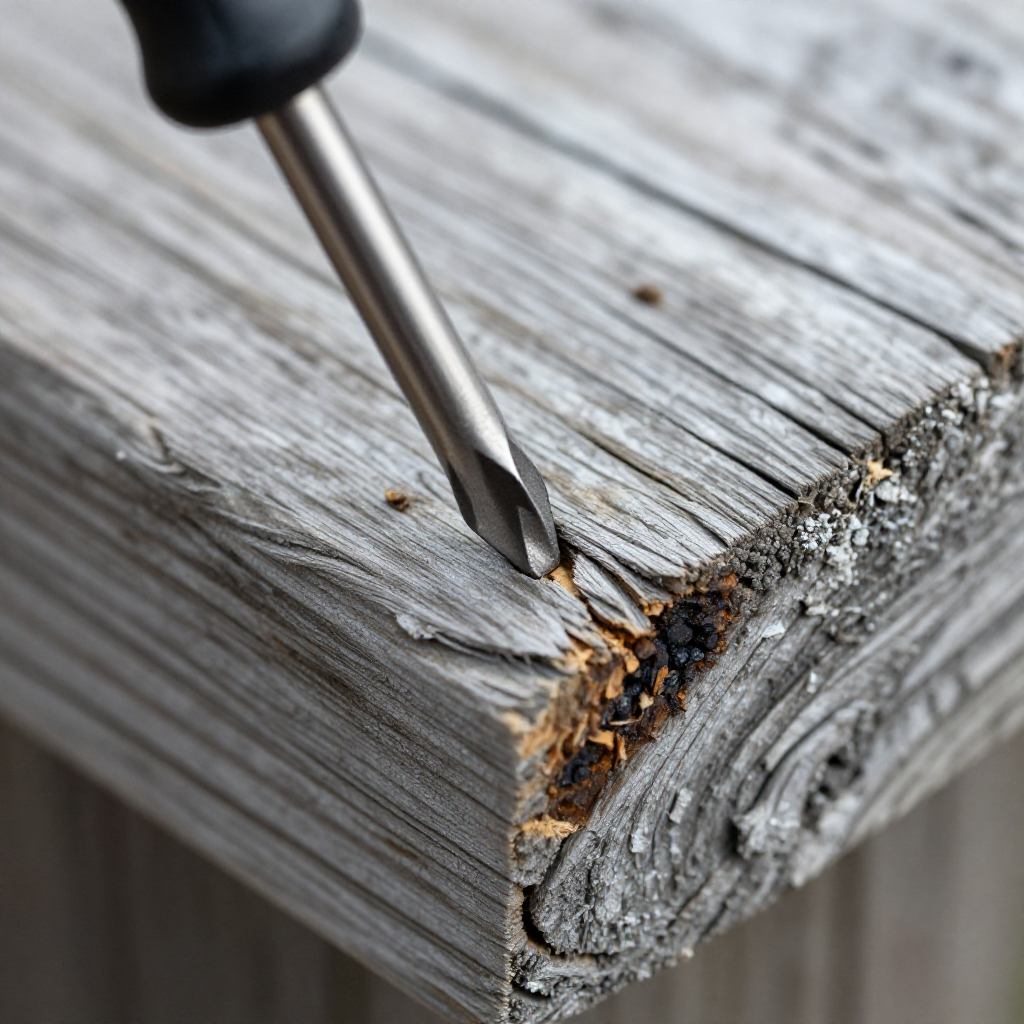
Probe the rot and mark your cut lines before pulling anything

Probe the rot and mark your cut lines before pulling anything

Stop prying at the soft wood — you'll just gouge the joist underneath. Take an awl or flathead screwdriver and probe the board ends. Anything that sinks in more than 1/4 inch is gone. Find solid wood past the rot and mark a cut line 2 inches beyond it, centered over a joist. If the rot has spread across multiple joist bays, trace it back to the first solid joist. The goal is cutting out only what's bad and leaving enough board to sister a clean replacement section.

visibility3. Visual Guidance

See what's happening and how to try the first recovery step.
1
Pull the fasteners from the rotted board section
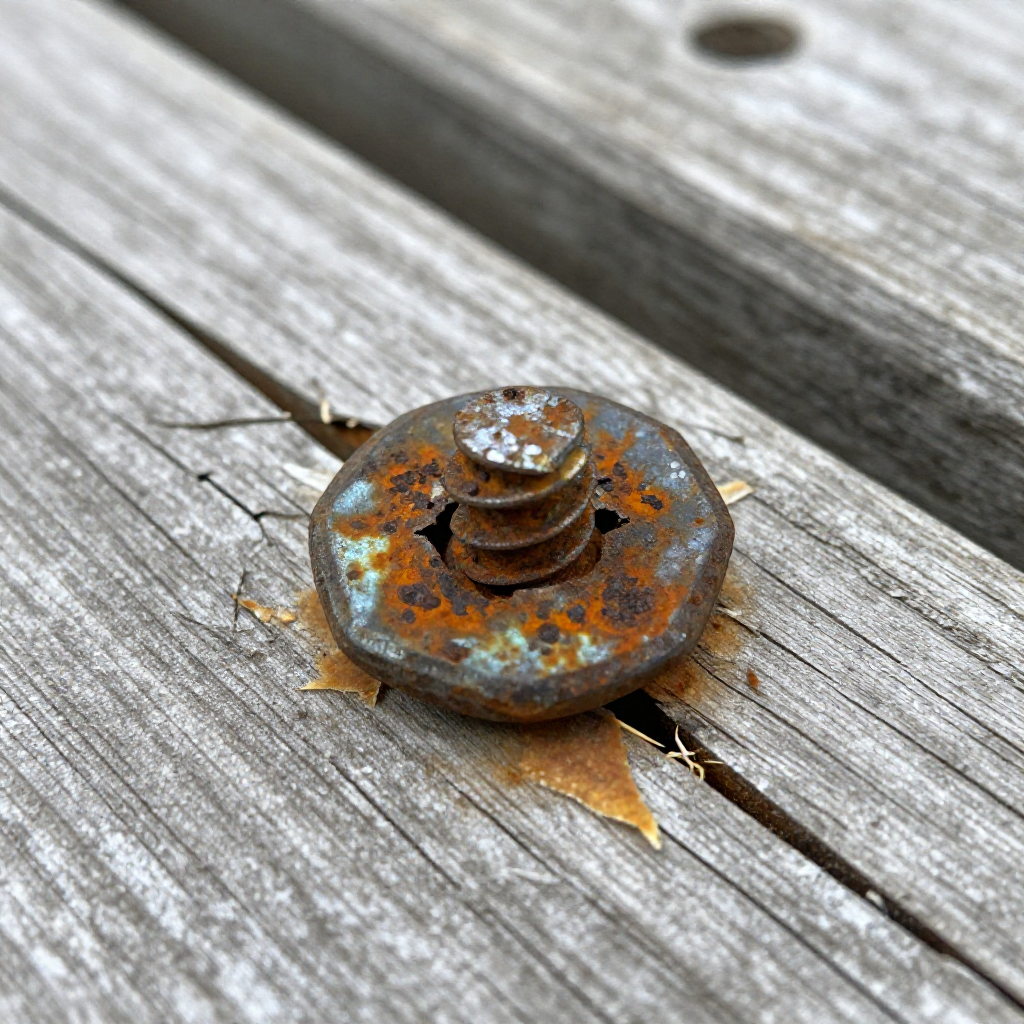
Pull the fasteners from the rotted board sectionDeck screws back out if they haven't rusted to dust. If they're nailed, use a cats paw or flat bar — drive the claws under the head, lever it up, and pull. If the screw head is stripped or rusted round, cut the board around the fastener with an oscillating multi-tool, then twist the screw stub out with vise grips later.
2
Cut the board at your marked line with a circular saw
Cut the board at your marked line with a circular sawSet your circular saw depth to the board thickness plus 1/16 inch — just enough to cut through without chewing the joist below. Cut straight across your mark. If you're mid-span between joists, make two cuts and remove the bad chunk, leaving the section over the joist for your sister joint. Wear eye protection — pressure-treated sawdust is nasty.
3
Screw down the replacement board and add blocking if needed
Screw down the replacement board and add blocking if neededCut your replacement board to length — match the existing wood species and thickness. If the butt joint doesn't land on a joist, screw a 2x4 blocking piece between the two joists to support both board ends. Use exterior-rated coated deck screws, two per joist. Leave a 1/8 inch gap at end joints for drainage and expansion.

autorenew4. If That Doesn't Work

Try the next recovery options.

flip
Flip the board over if only one face is rottedIf the bottom face is still solid and only the top is rotting, you can unscrew the entire board, flip it over, and refasten it. The cupped side goes down so water drains off. This only works with non-grooved boards and if the board isn't rotted at both ends.
chevron_right
format_paint
Use a wood hardener and epoxy filler for minor soft spotsIf the rot is surface-level — less than 1/4 inch deep — you can brush on a two-part wood hardener, let it cure, then fill with exterior-grade epoxy wood filler. Sand it smooth and seal. This buys you 2-3 years, not a permanent fix.
chevron_right
grid_view
Replace the entire deck surface if more than 30% of boards are badOnce you're replacing board after board, the math flips. New pressure-treated 5/4 deck boards run about $2 per linear foot. If you're doing more than a dozen, resurfacing the whole deck is faster and looks uniform.
chevron_right

Frequently Asked Questions

Can I just screw a thin board over the rotted section?expand_more
You can, and it'll look okay for about six months. Then water gets trapped between the two layers and rots both boards twice as fast. Always cut out the rot — never cover it.
How do I match the color of the new board to the old deck?expand_more
You won't match it fresh from the lumber yard. New pressure-treated wood is greenish-tan and takes 3-6 months to weather gray. Wait a full season, then clean and stain the entire deck one color. Or stain the replacement board to match now — it won't be perfect but it'll be close.
Will pressure-treated boards from the store match my existing deck thickness?expand_more
Most residential decks use 5/4 x 6 boards (actual 1 inch thick). Measure yours — if it's thick decking (1-1/4 inch) or thin (3/4 inch), you may need to special order or rip boards to match.
Should I seal the cut end of the new board?expand_more
Yes. End grain soaks up water like a straw. Brush on a liberal coat of end-cut wood preservative or copper-based sealer before installing. It's a 30-second step that doubles the lifespan of the board end.

warning5. Stop DIY If

Don't continue if any of these apply.

reportYou probe the joist under the rotted board and the wood is soft — the structural framing is rotting too. That's a deck safety issue that needs a pro or full rebuild.
reportThe deck ledger board where it attaches to the house shows rot, rust, or pulling away — this is a structural failure waiting to happen.
reportThe deck is more than 6 feet off the ground and guardrail posts are rotting at the base — fall hazard.
reportPressure-treated lumber from before 2004 contains CCA (chromated copper arsenate) — cutting or sanding releases arsenic dust. If your deck pre-dates 2004, test before cutting.
Still stuck?Get personalized help with AI Recovery.

Related Recovery Problems

View all arrow_forward

Similar Failure Pattern

This page provides general DIY guidance.
If you're unsure, it's always best to consult a professional.