STUCKFIX
handymanDIY Friendly
build

Wood Screw Spinning Loose in Particle Board Hole

When a screw spins in particle board and won't tighten, the wood fibers are gone. Fill the void, not with tricks, but with a method that actually holds weight.

Category:Furniture
Difficulty:Easy
Time:10-15 min
Success:50%
Updated:May 25, 2026

quick_referenceQuick Answer

For Wood Screw Spinning Loose in Particle Board Hole, start with "Fill the stripped hole with two-part epoxy putty instead of toothpicks": Forget wood glue and toothpicks — particle board doesn't have grain to grip. Cut a small piece of two-part epoxy putty (the kind you knead until uniform color), roll it into a taper, and push it firmly into the hole with the tip of a flathead screwdriver. Overfill slightly, then let it cure hard — usually 10-15 minutes for quick-set. Once cured, drill a 1/8-inch pilot hole in the center and drive the screw. The putty bonds to the board and holds threads like solid plastic. Stop DIY if the particle board is swelling from water damage — the structural integrity is gone across the whole sheet. This is listed as a easy recovery and usually takes about 10-15 min.

verifiedGuide Snapshot

Repair areaFurniture
Estimated time10-15 min
DifficultyEasy
Stop conditions3

Last updated May 25, 2026. Review the stop conditions before continuing.

account_treeRecovery State

Current stateStripped Screw Hole
Specific stateScrew Spins No Bite
Failed stepScrew Hole Repair
Likely failure typeWorn Part
DIY boundaryDIY recovery first
paymentsCost decision

help1. Understand the Problem

Particle board is pressed sawdust and glue — once a screw strips out, the surrounding material turns to powder. Driving a bigger screw, using toothpicks, or adding glue alone won't last because the substrate itself crumbles. The fix has to replace the missing material with something dense enough to hold threads.

build_circle2. Try This First
Best First Step
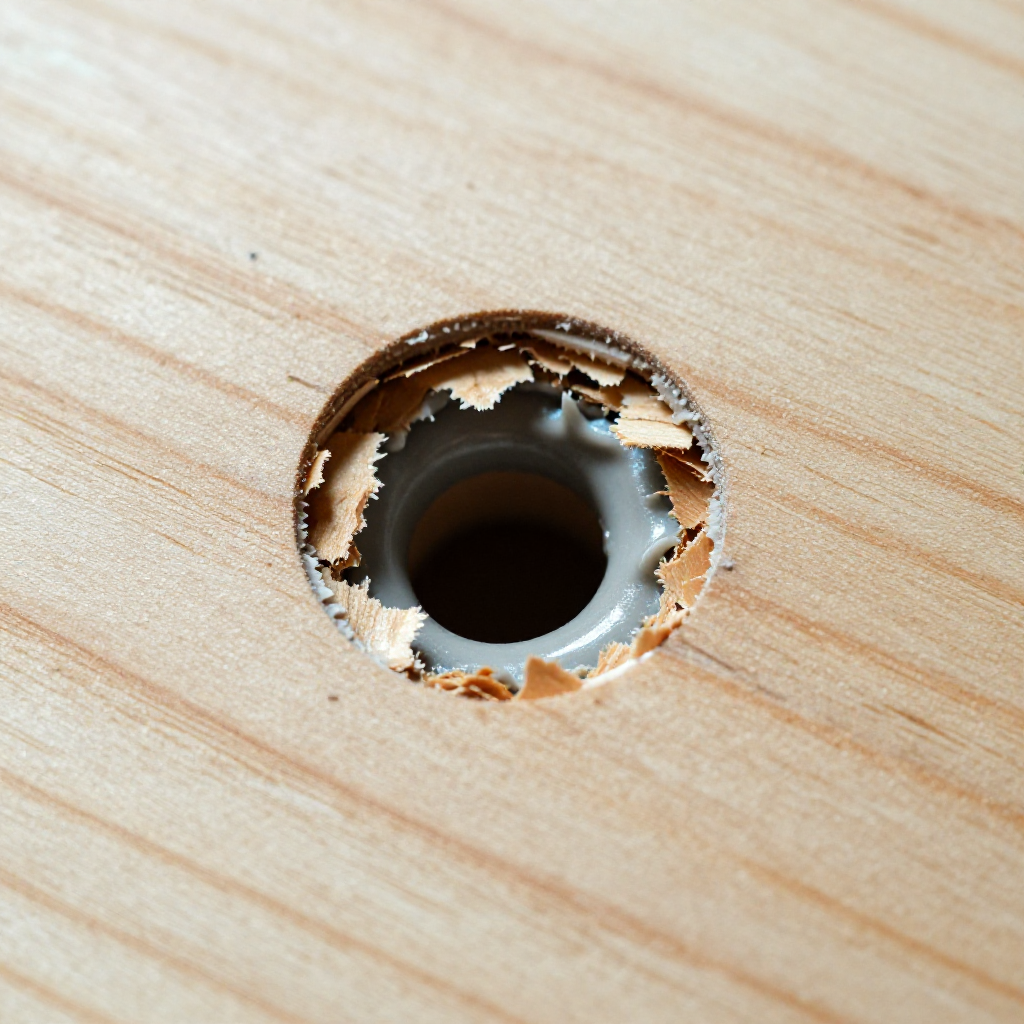
Fill the stripped hole with two-part epoxy putty instead of toothpicks

Fill the stripped hole with two-part epoxy putty instead of toothpicks

Forget wood glue and toothpicks — particle board doesn't have grain to grip. Cut a small piece of two-part epoxy putty (the kind you knead until uniform color), roll it into a taper, and push it firmly into the hole with the tip of a flathead screwdriver. Overfill slightly, then let it cure hard — usually 10-15 minutes for quick-set. Once cured, drill a 1/8-inch pilot hole in the center and drive the screw. The putty bonds to the board and holds threads like solid plastic.

visibility3. Visual Guidance

See what's happening and how to try the first recovery step.
1
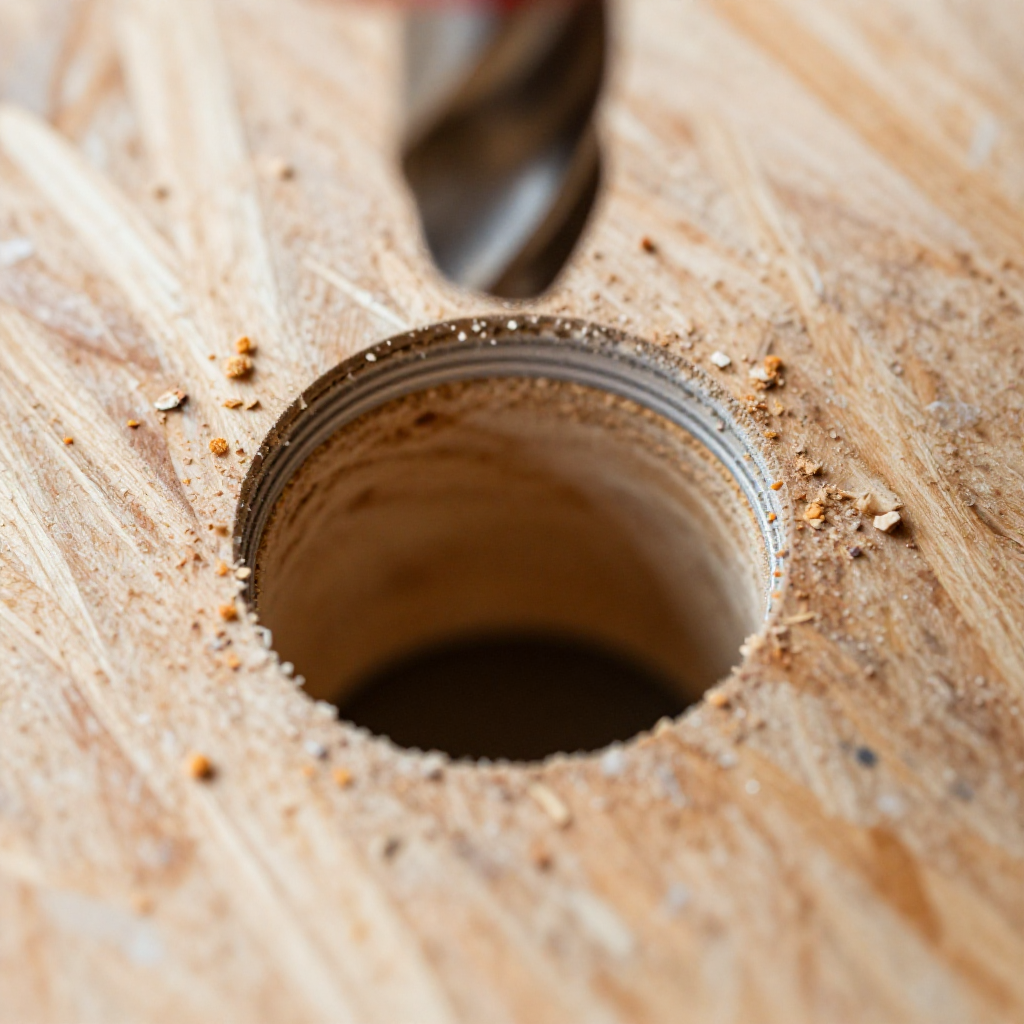
Drill out the damaged hole clean if it's jagged
Drill out the damaged hole clean if it's jaggedIf the old hole is egged-out or cratered from wobbling, drill it round with a bit slightly wider than the damage — 1/4 inch usually does it. This gives the epoxy a clean cylindrical wall to bond to instead of loose dust.
2
Pack the cavity fully, not just the surface
Pack the cavity fully, not just the surfaceDon't just smear putty on top — you need material depth for the screw to thread into. Use a toothpick or small dowel to ram the putty to the bottom of the hole. The screw needs at least its full diameter of depth in solid material.
3
Drill a precise pilot hole and drive the screw gently
Drill a precise pilot hole and drive the screw gentlyAfter the putty cures, use a drill bit that matches the screw's shank diameter (not the thread diameter) for the pilot hole. Then drive the screw by hand with a screwdriver, not a drill — epoxy putty holds threads well but strips instantly if you over-torque with a driver. Stop as soon as the screw head sits flush.

autorenew4. If That Doesn't Work

Try the next recovery options.

hardware
Use a threaded insert for repeated-use holesIf this is a hinge or drawer-pull screw that gets removed regularly, install a brass threaded insert instead. Drill the hole to the insert's diameter, screw the insert in with an Allen key, and now you have machine threads that never strip.
chevron_right
handyman
Dowels and wood glue for through-holesFor a hole that goes all the way through, glue in a snug-fitting hardwood dowel, cut it flush after the glue sets, and then drill a fresh pilot hole. This works better than putty when you have solid board depth.
chevron_right
near_me
Relocate the screw if the board is too thinParticle board under 1/2 inch thick won't hold a repair. Move the screw to a new location at least 1 inch from the stripped hole, pre-drill carefully, and patch the old hole with putty for cosmetics.
chevron_right

Frequently Asked Questions

Can I just use a bigger screw in a stripped particle board hole?expand_more
You can, but it's a short-term fix. A bigger screw pushes the weakened board material further apart and usually strips again within weeks. If you must, go up one gauge only and drive by hand.
Do toothpicks and wood glue actually work on particle board?expand_more
Not well. Particle board doesn't absorb glue like real wood — the glue sits on the surface and toothpicks can't grab loose sawdust. They might work for a lightweight drawer pull, but anything that bears load will fail.
What kind of epoxy putty should I use for furniture repair?expand_more
A general-purpose two-part epoxy putty stick works — you knead it until the color is uniform, then it cures in 10-15 minutes. Avoid liquid epoxy in particle board because it soaks right through.
How do I know if the particle board is too damaged to repair?expand_more
If you can push a screwdriver tip into the board around the hole with light pressure, the material is compromised. A repair in rotten particle board is like filling a hole in wet cardboard.

warning5. Stop DIY If

Don't continue if any of these apply.

reportThe particle board is swelling from water damage — the structural integrity is gone across the whole sheet.
reportYou're fixing a load-bearing connection — shelf brackets, TV mounts, or anything that holds weight above people.
reportThe board is cracked all the way through, not just surface chipping — a repair won't restore strength.
Still stuck?Get personalized help with AI Recovery.

Related Recovery Problems

View all arrow_forward

Similar Failure Pattern

This page provides general DIY guidance.
If you're unsure, it's always best to consult a professional.