STUCKFIX
handymanDIY Friendly
water_drop

Gutter Overflowing Even When It's Not Raining Hard? Clear It Now

Water spilling over your gutter edge isn't just a mess — it's soaking your foundation. Clear the clog before you're facing basement water damage and rotted fascia boards.

Category:Outdoor
Difficulty:Easy
Time:20-30 min
Success:50%
Updated:May 22, 2026

quick_referenceQuick Answer

For Gutter Overflowing Even When It's Not Raining Hard? Clear It Now, start with "Scoop the debris dam at the downspout opening first": Stop trying to flush it from the ground — water pressure alone won't break a packed clog. Set up your ladder on level ground with a spotter holding the base. Climb up wearing grippy gloves and scoop out the muck directly above and inside the downspout opening with your hand or a gutter scoop. This is where 90% of overflows start. Once you've cleared the opening, drop a garden hose down the downspout to check flow-through before you call it fixed. Stop DIY if your ladder sits on uneven ground or you're working higher than one story — gutter work from height is how people end up in the er. hire it out. This is listed as a easy recovery and usually takes about 20-30 min.

verifiedGuide Snapshot

Repair areaOutdoor
Estimated time20-30 min
DifficultyEasy
Stop conditions4

Last updated May 22, 2026. Review the stop conditions before continuing.

account_treeRecovery State

DeviceGutter
Current stateClogged Overflowing
Specific stateDownspout Blockage
Failed stepWater Diversion
Likely failure typeBlocked Path
DIY boundaryDIY recovery first
paymentsCost decision

help1. Understand the Problem

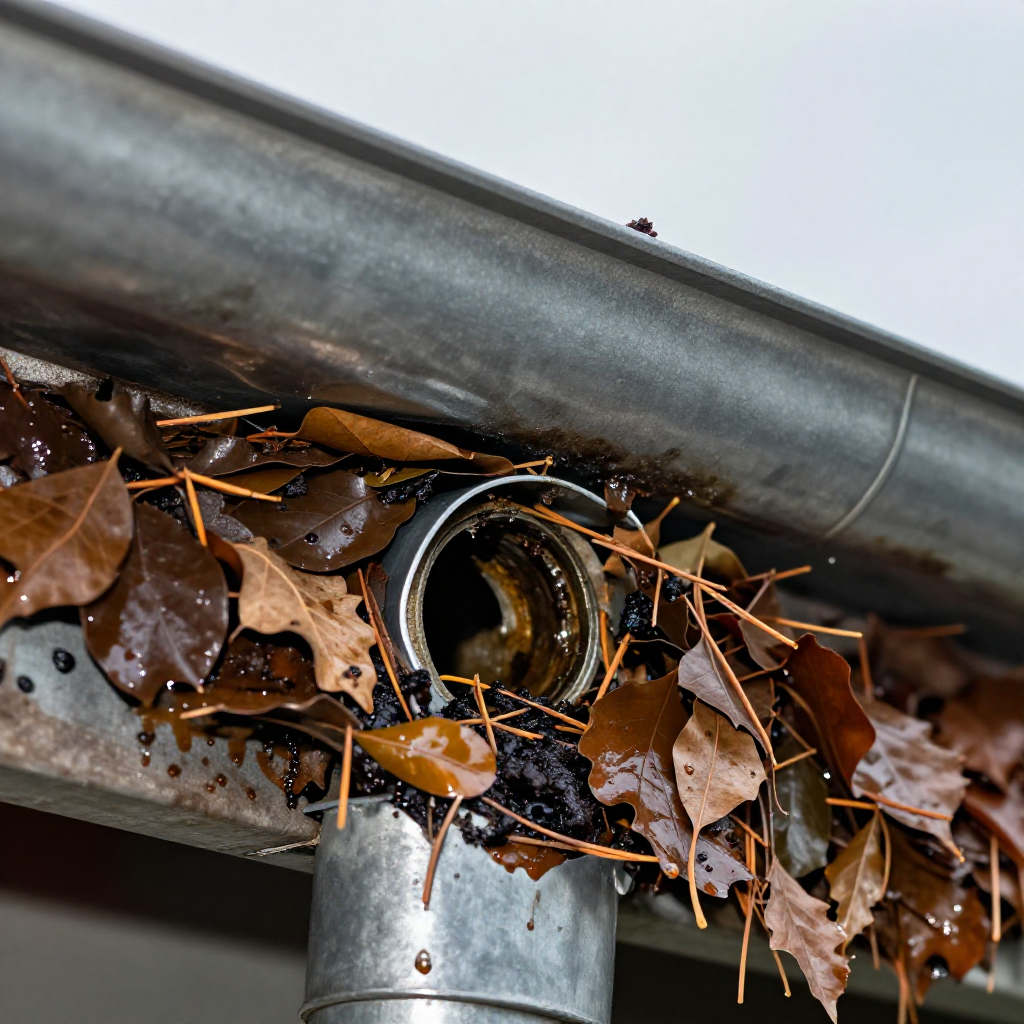
Gutters overflow when debris dams the downspout opening or the channel itself. The most common clog point is where the downspout connects — leaves and roof grit collect at the elbow, then pack tight when wet. In spring, maple seed helicopters and oak catkins are especially bad. Once the dam forms, every rain sends water over the gutter edge and straight down the foundation wall.

build_circle2. Try This First
Best First Step
Scoop the debris dam at the downspout opening first

Scoop the debris dam at the downspout opening first

Stop trying to flush it from the ground — water pressure alone won't break a packed clog. Set up your ladder on level ground with a spotter holding the base. Climb up wearing grippy gloves and scoop out the muck directly above and inside the downspout opening with your hand or a gutter scoop. This is where 90% of overflows start. Once you've cleared the opening, drop a garden hose down the downspout to check flow-through before you call it fixed.

visibility3. Visual Guidance

See what's happening and how to try the first recovery step.
1
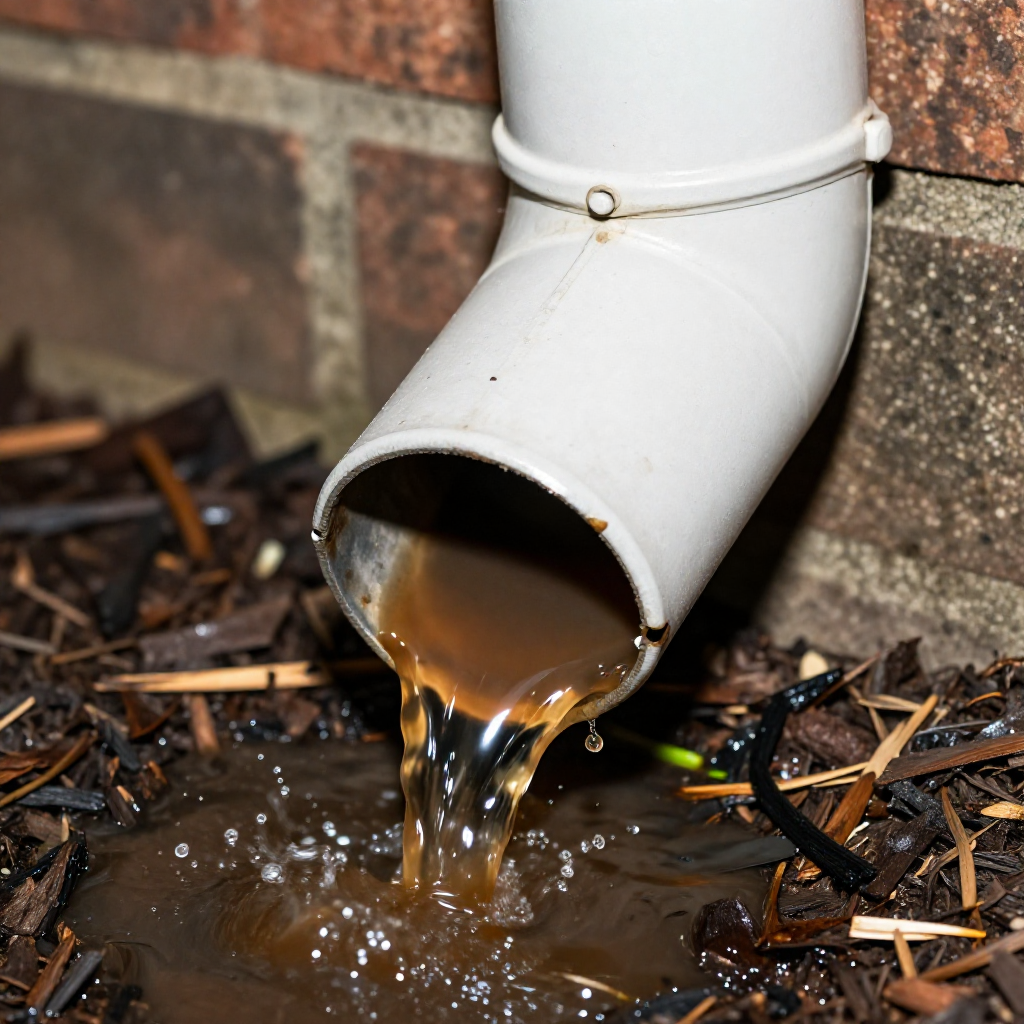
Check the downspout for blockage below with a hose
Check the downspout for blockage below with a hoseFeed a garden hose down the downspout from above and turn on the water. If it backs up and overflows at the top, you've got a clog in the vertical pipe. If water sprays out at the downspout elbow mid-wall, the joint has separated. For deep clogs, run a plumber's snake up from the bottom outlet.
2
Walk the gutter length and clear the channel
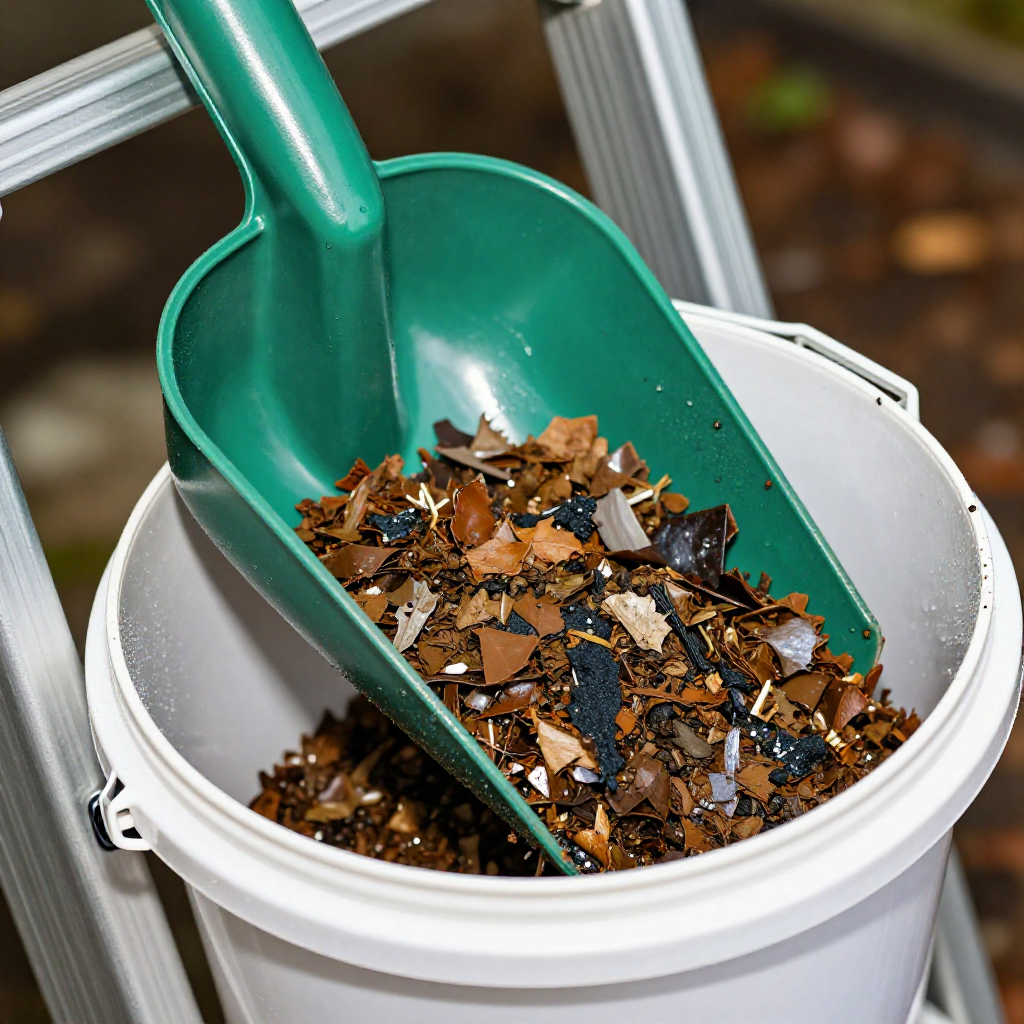
Walk the gutter length and clear the channelWith the downspout flowing, work your way along the gutter with the scoop. Pull everything — leaves, shingle grit, tennis balls, whatever the wind dropped in. Drop debris into a bucket hooked to the ladder, not onto the ground below. Wear a dust mask if you're dealing with dry, powdery shingle aggregate.
3
Flush the entire gutter system and check for leaks
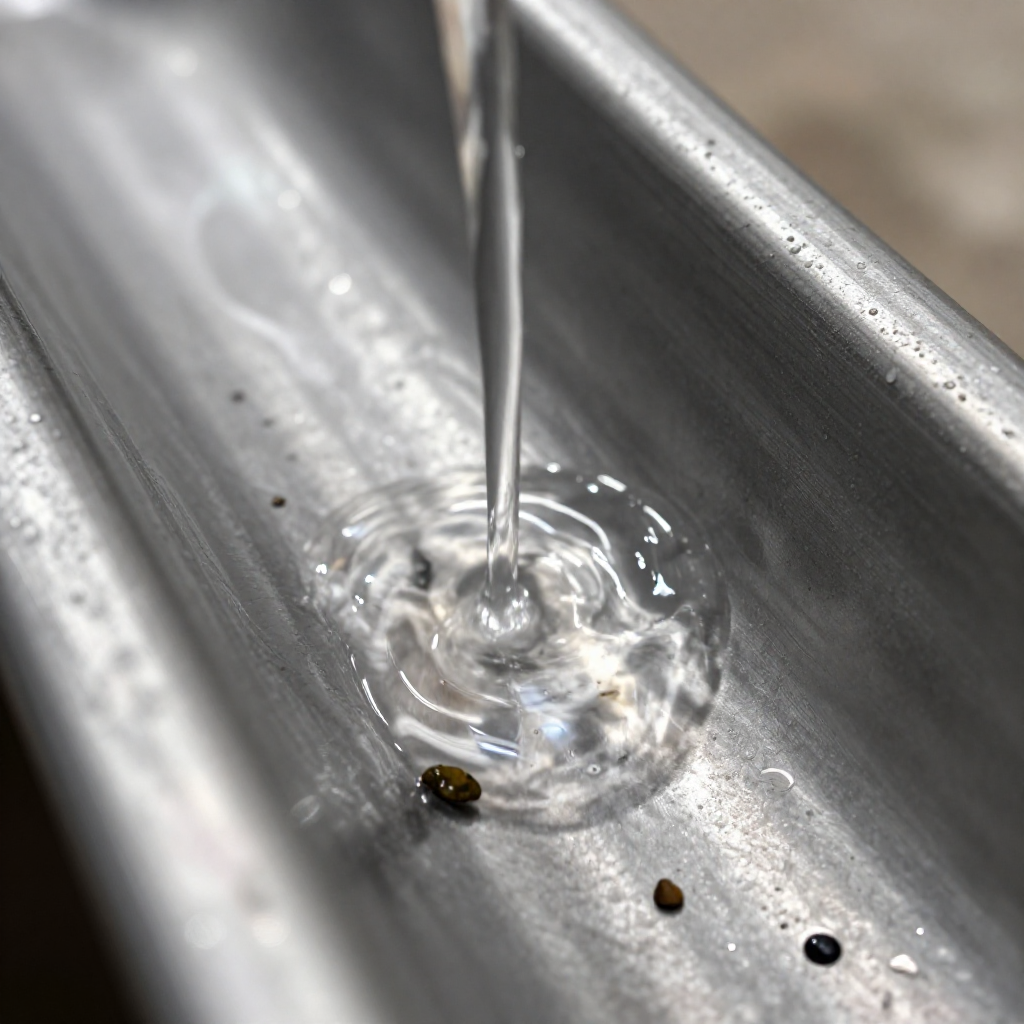
Flush the entire gutter system and check for leaksRun a garden hose from the high end of each gutter run and let water flow to the downspout. Watch for water dripping behind the gutter — that indicates the drip edge isn't tucked or the gutter has pulled away from the fascia. Mark any leaky seams or sagging sections with a pencil for repair later.

autorenew4. If That Doesn't Work

Try the next recovery options.

pressure_washer
Use a pressure washer with a gutter wand attachmentIf you've got a pressure washer, a curved gutter wand lets you blast debris out from the ground. Work from the far end toward the downspout. This is messier but keeps you off the ladder. Just don't aim the wand under the shingles — you'll lift them.
chevron_right
shield
Install gutter guards after cleaningOnce the gutters are clear, snap in mesh or micro-mesh gutter guards. They're not maintenance-free — fine debris still gets through — but they'll stop the big leaf dams. Expect to still peek inside once a year.
chevron_right
straighten
Re-grade the gutter pitch if standing water remainsAfter cleaning, if water pools in the gutter instead of running toward the downspout, the pitch is off. Gutters need 1/4 inch of slope per 10 feet of run. Unclip the hangers, shim the low sections up, and re-secure.
chevron_right

Frequently Asked Questions

How often should I clean my gutters?expand_more
Twice a year minimum — once after fall leaf drop and once in late spring after seed and pollen season. If you have pine trees overhead, make it three times. One overflowing gutter can dump 500 gallons of water against your foundation in a single heavy rain.
Can I clean gutters without a ladder?expand_more
You can use a leaf blower with a gutter attachment kit, a pressure washer with a curved wand, or a wet/dry vac with extension tubes. These work for loose, dry debris but won't clear packed sludgy clogs at the downspout — you'll still need to climb up for those.
Why does my gutter overflow in the middle instead of at the downspout?expand_more
That usually means the gutter is sagging in that section, creating a low spot where water pools. Check the hanger spacing — they should be every 24-30 inches. A sagged section needs re-pitched or additional hangers installed.
Will gutter guards stop me from ever needing to clean again?expand_more
No. Even the best micro-mesh guards still let fine roof grit and pollen through. What they do is stop leaves and twigs from forming the big dams that cause overflows. Budget for once-a-year light cleaning even with guards installed.

warning5. Stop DIY If

Don't continue if any of these apply.

reportYour ladder sits on uneven ground or you're working higher than one story — gutter work from height is how people end up in the ER. Hire it out.
reportThe fascia board behind the gutter is soft, black, or crumbling — you have wood rot from long-term overflow that needs carpenter work, not just a cleaning.
reportWater is entering the basement or crawlspace from the foundation wall after gutter overflow — you need drainage correction, not just gutter cleaning.
reportThe gutter itself is pulling away, sagging, or has rusted-through sections. A cleaning won't fix failed hangers or rotted-out metal.
Still stuck?Get personalized help with AI Recovery.

Related Recovery Problems

View all arrow_forward

Same Device Recovery States

Device index arrow_forward

Similar Failure Pattern

This page provides general DIY guidance.
If you're unsure, it's always best to consult a professional.