STUCKFIX
handymanDIY Friendly
garage_home

Garage Door Opener Chain Snapped or Off the Sprocket

A snapped or derailed garage door opener chain means your door is dead weight. Before you call for a new opener, see if the chain just needs reattaching or a $15 master link.

Category:Doors & Windows
Difficulty:Moderate
Time:45 min
Success:50%
Updated:May 22, 2026

quick_referenceQuick Answer

For Garage Door Opener Chain Snapped or Off the Sprocket, start with "Disengage the trolley and check the door balance by hand": Pull the emergency release cord — the red handle hanging from the rail — to disconnect the trolley from the chain. Now try to lift the door manually. It should lift smoothly with one hand and stay halfway up on its own. If it crashes down or is a struggle to lift, your springs are shot. Fixing the chain won't help — the opener is fighting a heavy door and will just break again. Call a pro for the springs. If the door is balanced, proceed to reattach the chain. Stop DIY if the garage door is extremely heavy, won't stay up, or slams down when you release the trolley — the torsion springs are broken. spring replacement is dangerous and requires a pro. This is listed as a moderate recovery and usually takes about 45 min.

verifiedGuide Snapshot

Repair areaDoors & Windows
Estimated time45 min
DifficultyModerate
Stop conditions4

Last updated May 22, 2026. Review the stop conditions before continuing.

account_treeRecovery State

Current stateChain Broken
Specific stateChain Snapped Or Derailed
Failed stepOpener Chain Tension
Likely failure typeMechanical Jam
DIY boundaryDIY recovery first
paymentsCost decision

help1. Understand the Problem

Opener chains snap or jump the sprocket for two reasons: the tension was too loose and the chain caught, or the door itself got heavy — weak springs, rusted rollers, or ice on the bottom seal. When the chain breaks, the motor runs but the door sits still. The trolley may slam to one end, bending the rail. This often happens after years of neglected spring maintenance.

build_circle2. Try This First
Best First Step
Disengage the trolley and check the door balance by hand

Disengage the trolley and check the door balance by hand

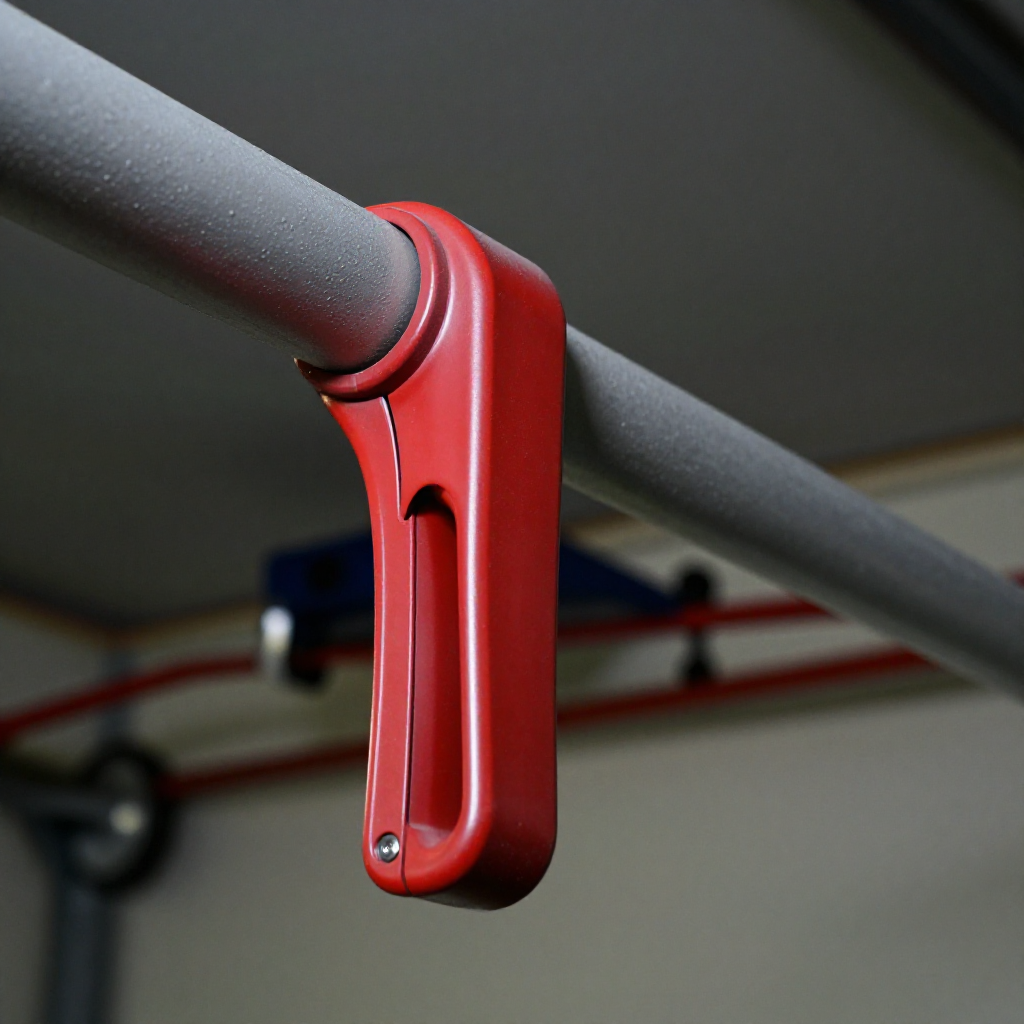
Pull the emergency release cord — the red handle hanging from the rail — to disconnect the trolley from the chain. Now try to lift the door manually. It should lift smoothly with one hand and stay halfway up on its own. If it crashes down or is a struggle to lift, your springs are shot. Fixing the chain won't help — the opener is fighting a heavy door and will just break again. Call a pro for the springs. If the door is balanced, proceed to reattach the chain.

visibility3. Visual Guidance

See what's happening and how to try the first recovery step.
1
Unplug the opener and inspect the chain path
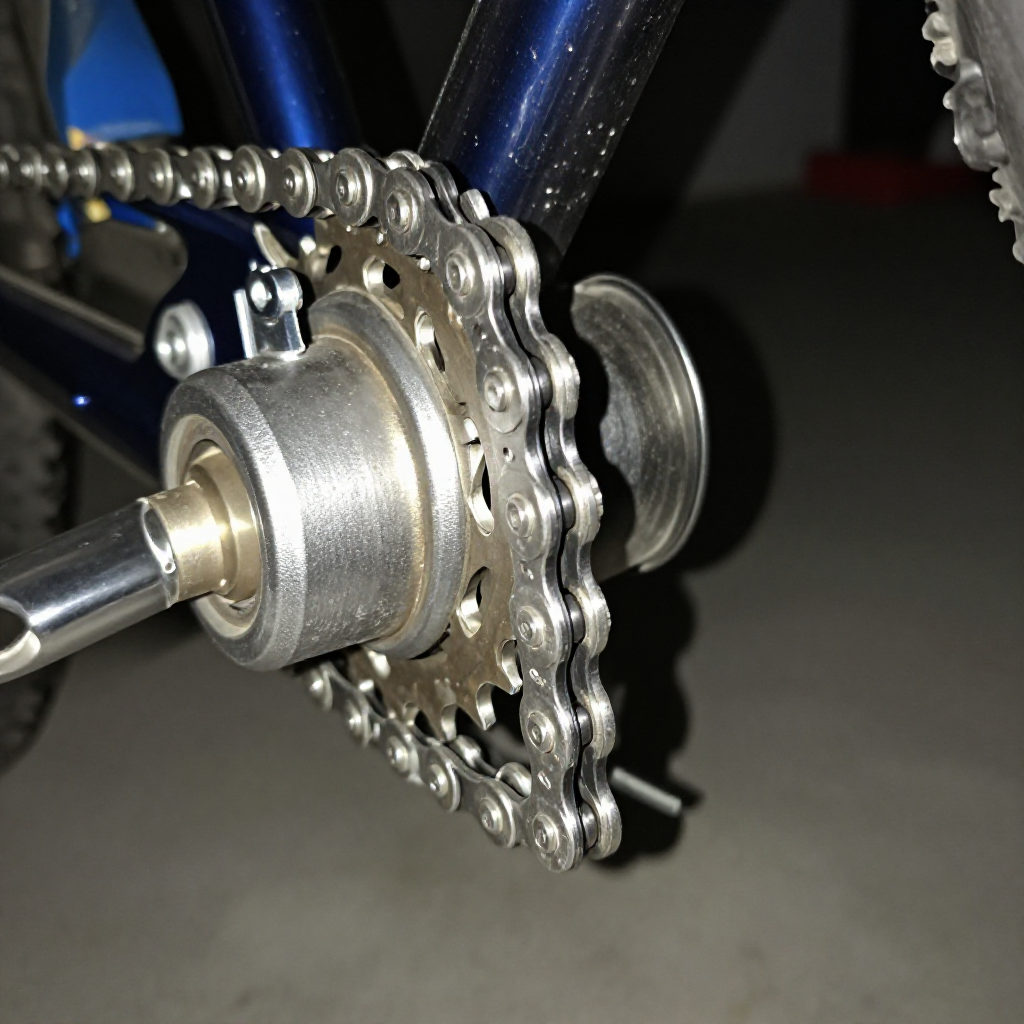
Unplug the opener and inspect the chain pathPull the plug on the opener motor unit. Climb a stepladder and trace the entire chain loop — from the motor sprocket, along the rail, around the idler pulley at the header end, and back. Look for a clean break at a master link, a derailed chain hanging off one side of the sprocket, or a stretched chain that's sagging more than 1/2 inch below the rail.
2
Repair or reconnect the chain with a master link
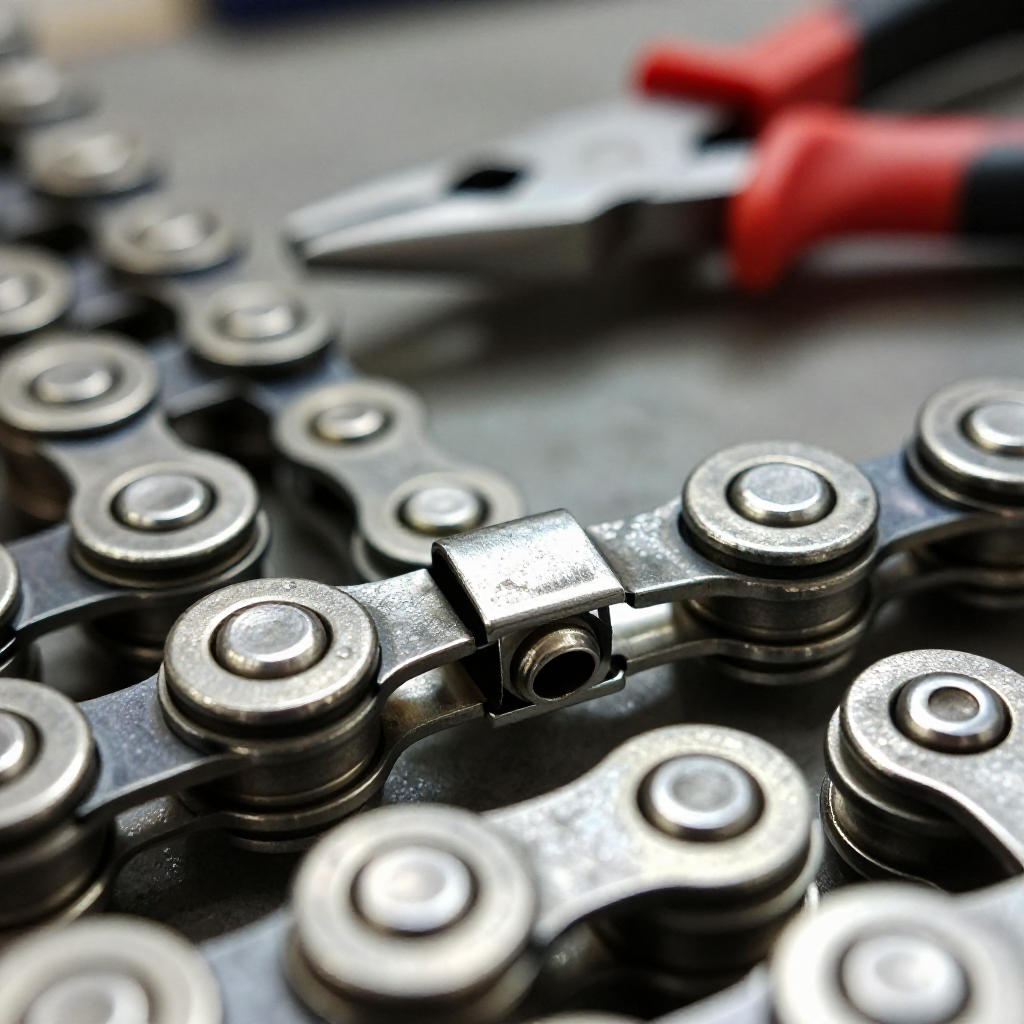
Repair or reconnect the chain with a master linkIf the chain broke clean at the master link, reconnect the two ends with a new universal opener chain master link kit — $10-15 at any hardware store. Slide the link pin through both chain ends, press the clip on with needle-nose pliers, and make sure the closed end of the clip faces the direction of chain travel. If the chain is just derailed, lift it back onto the sprocket teeth and the idler pulley.
3
Set chain tension and test the opener
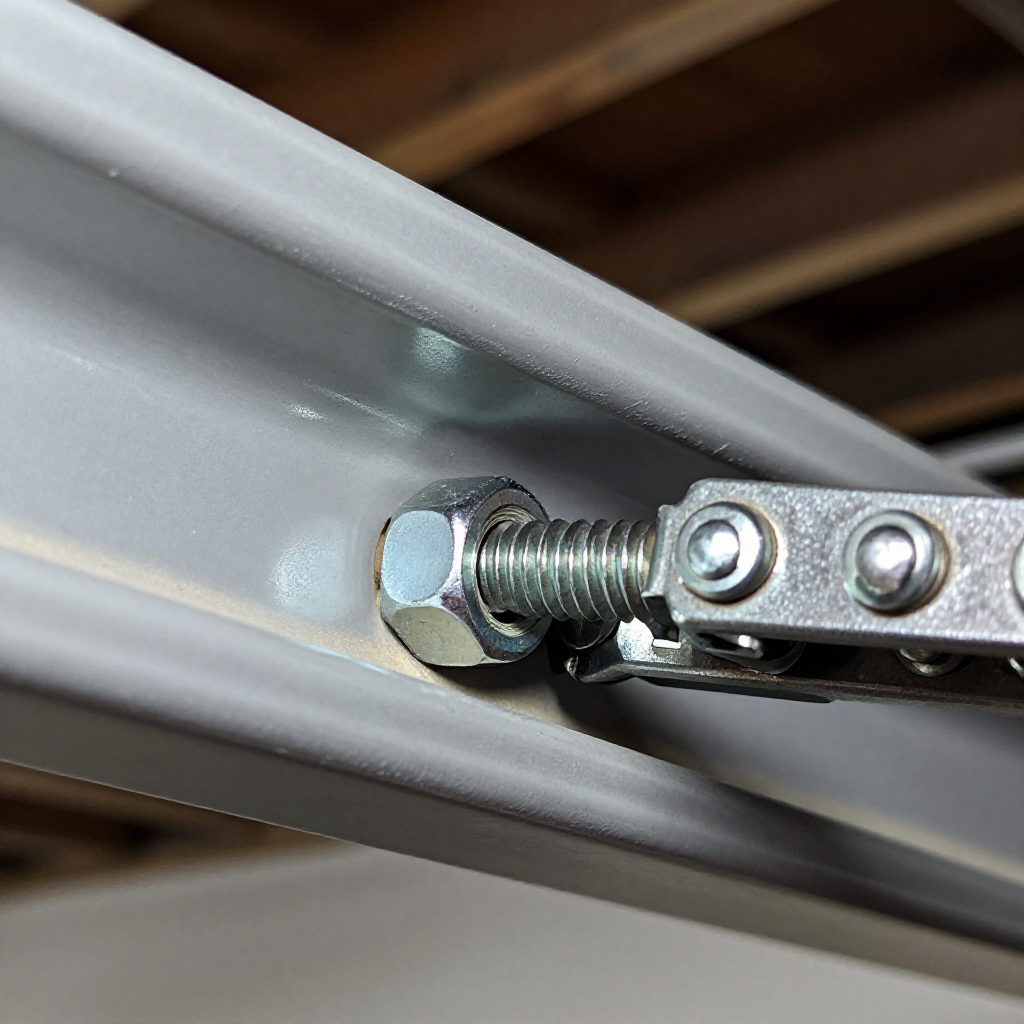
Set chain tension and test the openerLocate the chain tension adjustment — usually a threaded bolt and locknut on the rail or at the motor unit. Tighten until the chain has about 1/4 to 1/2 inch of play when you push up on it at the midpoint of the rail. Reconnect the trolley by pulling the release cord toward the door until it clicks. Plug in the opener and run a full cycle. Listen for grinding or slapping — those mean the chain is still too loose.

autorenew4. If That Doesn't Work

Try the next recovery options.

build
Replace the entire chain and rail assemblyIf the chain is severely stretched, has multiple kinked links, or the rail is bent from a trolley collision, buying a full chain-and-rail replacement kit ($50-80) is smarter than patching. The old rail unbolts from the motor and header bracket. The new assembly comes pre-strung.
chevron_right
upgrade
Switch to a belt-drive openerIf your chain-drive opener is 10+ years old and was always noisy, now's the time to upgrade. Modern belt-drive openers are quiet enough for bedrooms above the garage. A full opener swap is 2-3 hours and around $200-300 for the unit.
chevron_right

Frequently Asked Questions

Why does my garage door opener run but the door doesn't move?expand_more
Three things to check in order: the emergency release cord is pulled and the trolley is disengaged (push it back until it clicks), the chain has snapped or jumped off the sprocket, or the coupler between the motor and the drive gear has stripped out internally.
Can I just splice a broken chain with a regular chain link?expand_more
No. Garage door opener chains are a specific pitch — usually #41 or #48 roller chain. Using a hardware store connector link that doesn't match the pitch will bind on the sprocket teeth. Buy the correct master link for your opener model.
How tight should the opener chain be?expand_more
At the midpoint of the rail, you should be able to push the chain up about 1/4 to 1/2 inch from the bottom of the rail. Too tight and the sprocket bearings wear prematurely. Too loose and the chain slaps the rail or jumps teeth.

warning5. Stop DIY If

Don't continue if any of these apply.

reportThe garage door is extremely heavy, won't stay up, or slams down when you release the trolley — the torsion springs are broken. Spring replacement is dangerous and requires a pro.
reportThe opener rail is visibly bent, cracked, or has sheared-off bolt holes — continuing to run the opener on a damaged rail risks the motor unit tearing itself off the ceiling.
reportYou see frayed or melted wiring anywhere on the opener motor unit or wall control — that's an electrical short or fire hazard.
reportThe opener is older than 1993 and lacks auto-reverse safety sensors — these units should be replaced entirely for safety compliance.
Still stuck?Get personalized help with AI Recovery.

Related Recovery Problems

View all arrow_forward

Same Device Recovery States

Device index arrow_forward

Similar Failure Pattern

This page provides general DIY guidance.
If you're unsure, it's always best to consult a professional.